
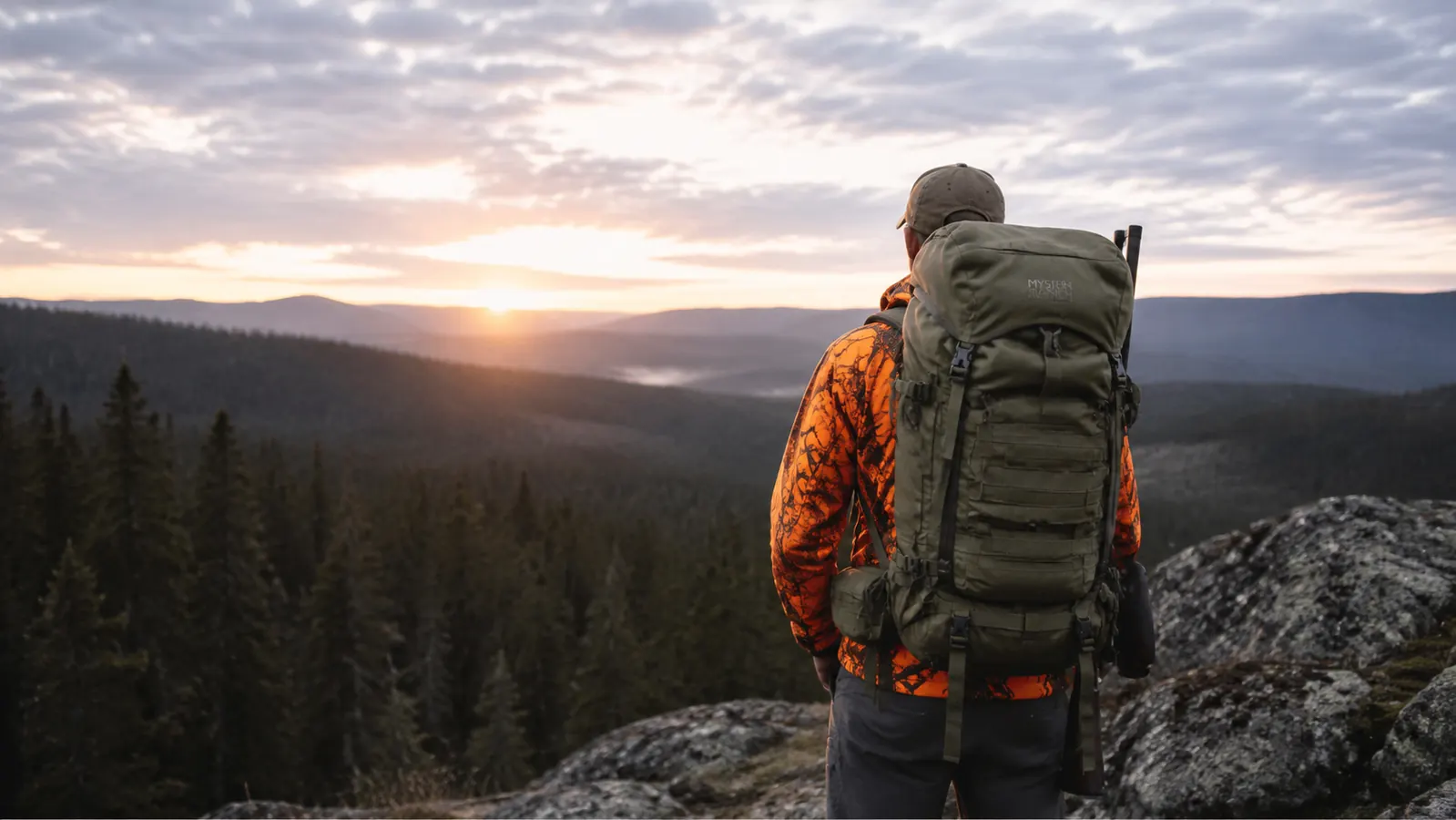
I had been putting off a proper backcountry deer hunt for three seasons. Not because I didn't want to go, but because the math never worked out right. You need enough pack space to carry a real camp, enough structure to keep a 40-plus-pound load from turning your lower back into a wreck by day two, and enough capacity left over to haul out meat if you get lucky. Most packs I'd tried were either too small, too flimsy, or priced like they were made out of carbon fiber and promises. Last October I finally figured it out. The fix was a pack that cost me less than a tank of gas and handled three days in the Rockies without a single complaint. The Teton Sports Scout 55L. If you want the full breakdown on how it performs across the whole season, start with my long-term Teton Scout 55L review. But this is the story of the hunt that convinced me it was worth recommending to anyone who asks.
The trailhead was at 8,400 feet. By the time I got to my glassing spot on the ridge I was pushing 9,800. The pack on my back weighed 43 pounds loaded: a three-season sleeping bag, a bivy shell, a lightweight stove and two fuel canisters, four days of food (I brought a buffer), a skinning kit, rope, spare layers, and my rifle on the side straps. That's the reality of a solo backcountry hunt. You're the truck. There's no buddy taking half the load. The pack either handles it or your knees pay.
By mile three the hip belt had transferred most of the weight off my shoulders and I stopped thinking about the pack entirely. That's exactly what a good pack should do: disappear.
What got my attention first was the internal frame. I've used external frame packs for decades, and they're fine on established trails. But the terrain I was crossing on day one wasn't trail. It was a sidehilling mess of loose shale, downed timber, and root balls. An external frame wants to shift and pull you sideways when the ground gets unpredictable. The Scout's internal frame holds the load tight to your back and lets you move like the pack is part of you. I scrambled over two blowdowns in the first mile and never felt the top of the pack catch a branch or threaten to tip me over. That's not a small thing when you're miles from the nearest road.
Three days of mountain terrain, 40+ pounds, and it never let me down.
The Teton Scout 55L has a 4.7-star rating from nearly 8,000 buyers. It's built for exactly this kind of trip. Check today's price on Amazon before your next hunt.
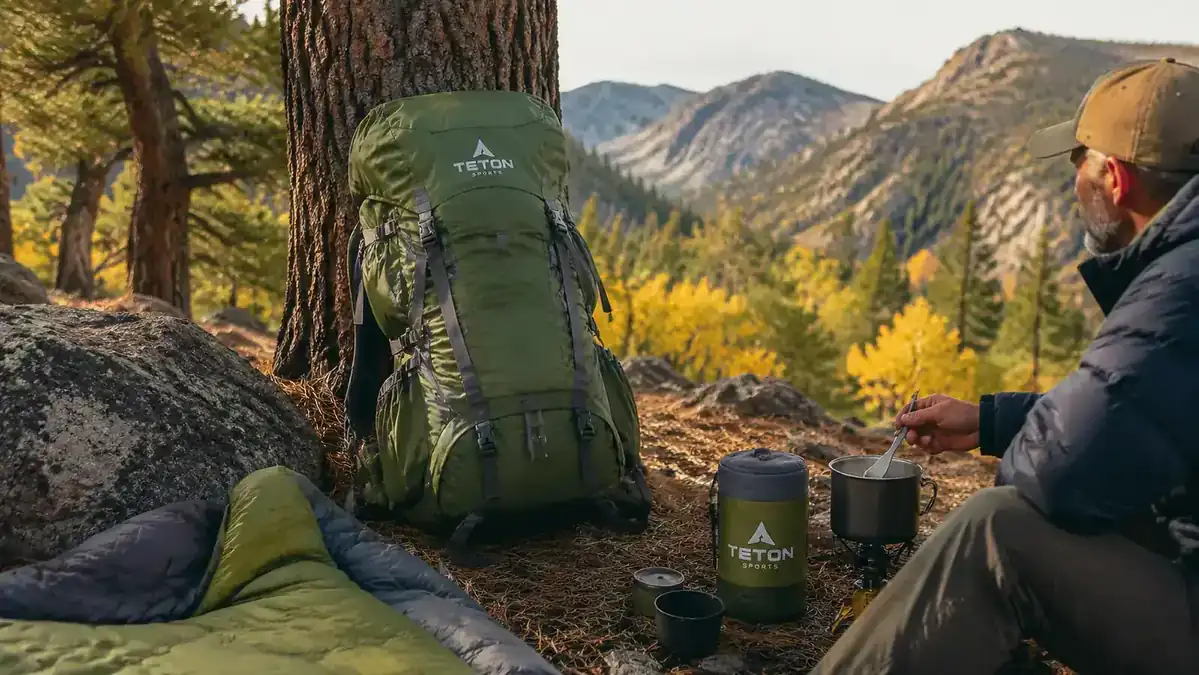
Amazon Check Today's Price on Amazon →I made camp the first night at a small flat spot just below a limestone rim. Pitched the bivy, got water from the creek 200 yards below, and started thinking about dinner. I had the same lightweight stove I'd trusted at 10,000 feet the season before, and it fired right up in the cold. The Scout leaned against a spruce, fully loaded still, and didn't tip over or slump. Good stiff frame. I unclipped the sleeping bag from the bottom compartment without unpacking everything above it. The separate bottom compartment is the kind of feature that sounds minor until you've spent ten minutes digging through a top-loaded pack at 8 PM in the dark trying to find your bag.
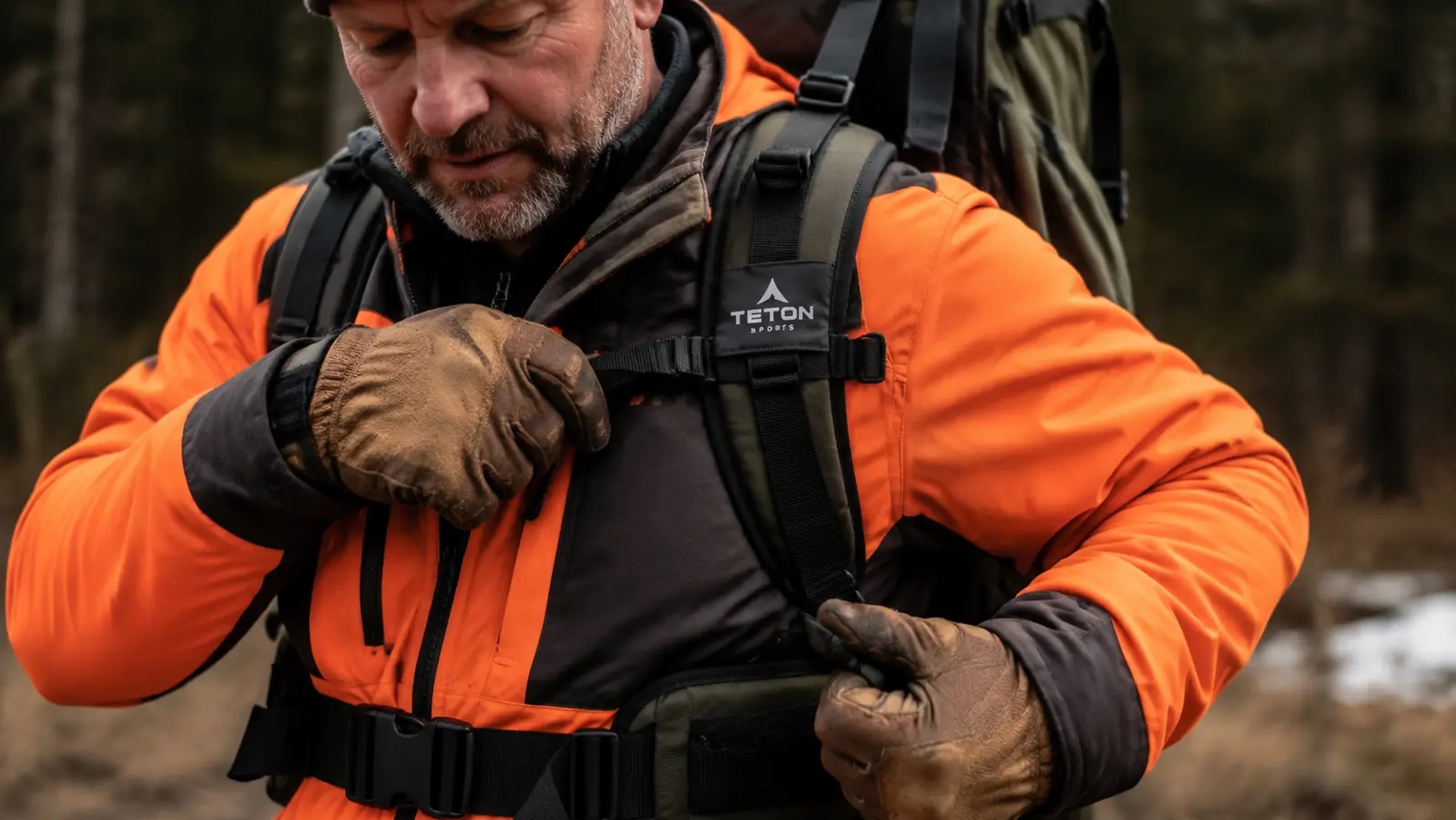
Day two I covered rough country. Up before light, glassing until 10, then pushing further north along a drainage where I'd scouted on the map. The pack rode well all morning. The hip belt padding isn't thin foam junk, it's got real substance and it stayed in place through scrambles and long downhill stretches that would have had a lesser belt creeping up toward my waist. The shoulder straps are padded without being so soft they compress to nothing. By mile eight I was tired, but my shoulders weren't raw and my lower back wasn't locked up. That matters.
I found a buck bedded in a north-facing thicket at 2 PM on day three. One shot, clean. The next few hours were the real test of the pack. I had to skin, quarter, and bag the deer, then figure out how to get roughly 70 pounds of boned-out meat plus my camp kit back to the trailhead over 4.5 miles of mixed terrain. I lashed the game bags to the exterior of the Scout using the side compression straps and the external lash points on the front panel. It wasn't pretty, but it held. I made it out before dark, my knees aching but my back intact. A pack that isn't built for meat hauling will tell you immediately when you load it that way. This one kept everything stable and didn't try to fold in half on the downhills.
One honest note: the shoulder strap padding is on the firmer side. Over a full day of heavy hauling you'll feel it. I added a thin foam pad under the straps on day three and that helped. If you're doing this kind of trip regularly, it's worth knowing. The pack is also not waterproof, just water resistant. I carried a rain cover and used it. Not a deal-breaker, just worth knowing before you head into mountain weather. If you want to know exactly how I packed the Scout for this trip, I laid it out step by step in this guide on how to pack a 55L backpack for a camping weekend. Same principles apply for a hunt.
What I'd Tell You If We Were Sitting at My Kitchen Table
Here's what I'd say if you asked me straight: most people shopping for a backcountry pack get stuck between buying cheap and buying way more than they need. The budget packs from the big box stores don't have the frame or the suspension to carry real weight for real miles. The premium packs are excellent, but you've got to want to spend that kind of money before you've proven to yourself that you'll do this kind of trip more than once.
The Teton Scout 55L sits in a spot that actually makes sense. It's a full internal frame pack with load transfer that works. The capacity is right for three days without going bigger than you need. The construction is solid, not ultralight, not fragile. I've put serious miles on mine and it looks like it has more years left in it. If you're planning a first backcountry hunt, a multi-day hiking trip, or just tired of squeezing a weekend's worth of gear into a bag that wasn't designed for it, this is the pack I'd point you toward. Not because it's flashy. Because it does the job and keeps doing it.
Ready to stop fighting your pack on the trail?
The Teton Scout 55L carries what you need, transfers the weight to your hips, and doesn't fall apart when it matters. Nearly 8,000 buyers agree. Check today's price on Amazon.
Amazon Check Today's Price on Amazon →