
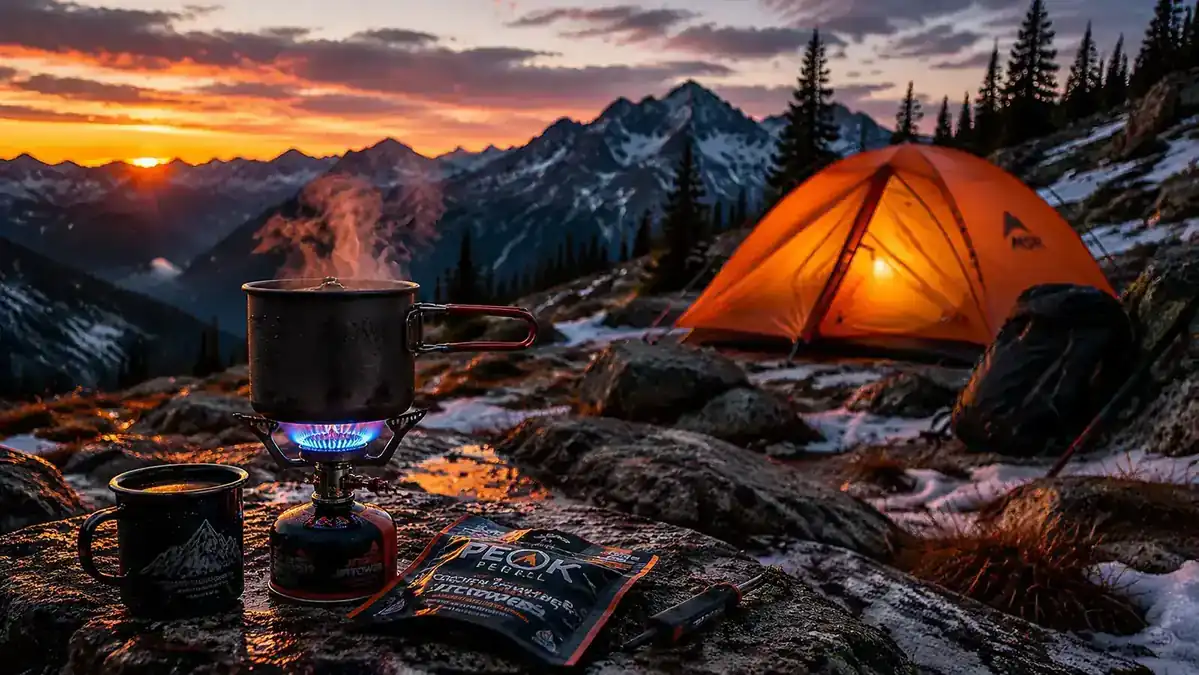
It was the third day of a late-October backpacking trip in the Colorado Rockies, camped just above 10,000 feet on a ridge I had been trying to reach for two seasons. My buddy Dale and I had pushed up there in the afternoon, and by the time we got the tent staked down, the temperature was already dropping hard. Wind out of the northwest, maybe 25 miles per hour with gusts that snapped the tent fabric like a whip. We were fine on shelter. What I was not sure about was dinner. The AOTU backpacking stove I had been carrying for two years was sitting in the top of my pack, and I had not used it yet above 8,000 feet. I did not know what it would do at altitude in that kind of cold.
I should back up. I almost left that stove at home on this trip. I have a heavier two-burner propane unit I use for car camping, and there was a part of me that figured I would just bring a cold-soak kit and skip cooking entirely. Three days, freeze-dried stuff you can eat without heat. But Dale talked me out of it. He said there is nothing worse than being cold and wet and not having something hot in your stomach at the end of the day. He was right. I threw the AOTU in the pack at the last minute, along with a single 100-gram isobutane canister, figuring if it worked it worked and if it did not we would eat cold.
If you need a stove that goes where the big units can't, the AOTU is worth a look before your next trip.
Compact, light, and piezo-ignited. Fits in a shirt pocket. Budget-priced and rated 4.6 stars across 6,500+ real-world reviews.
Amazon Check Today's Price on Amazon →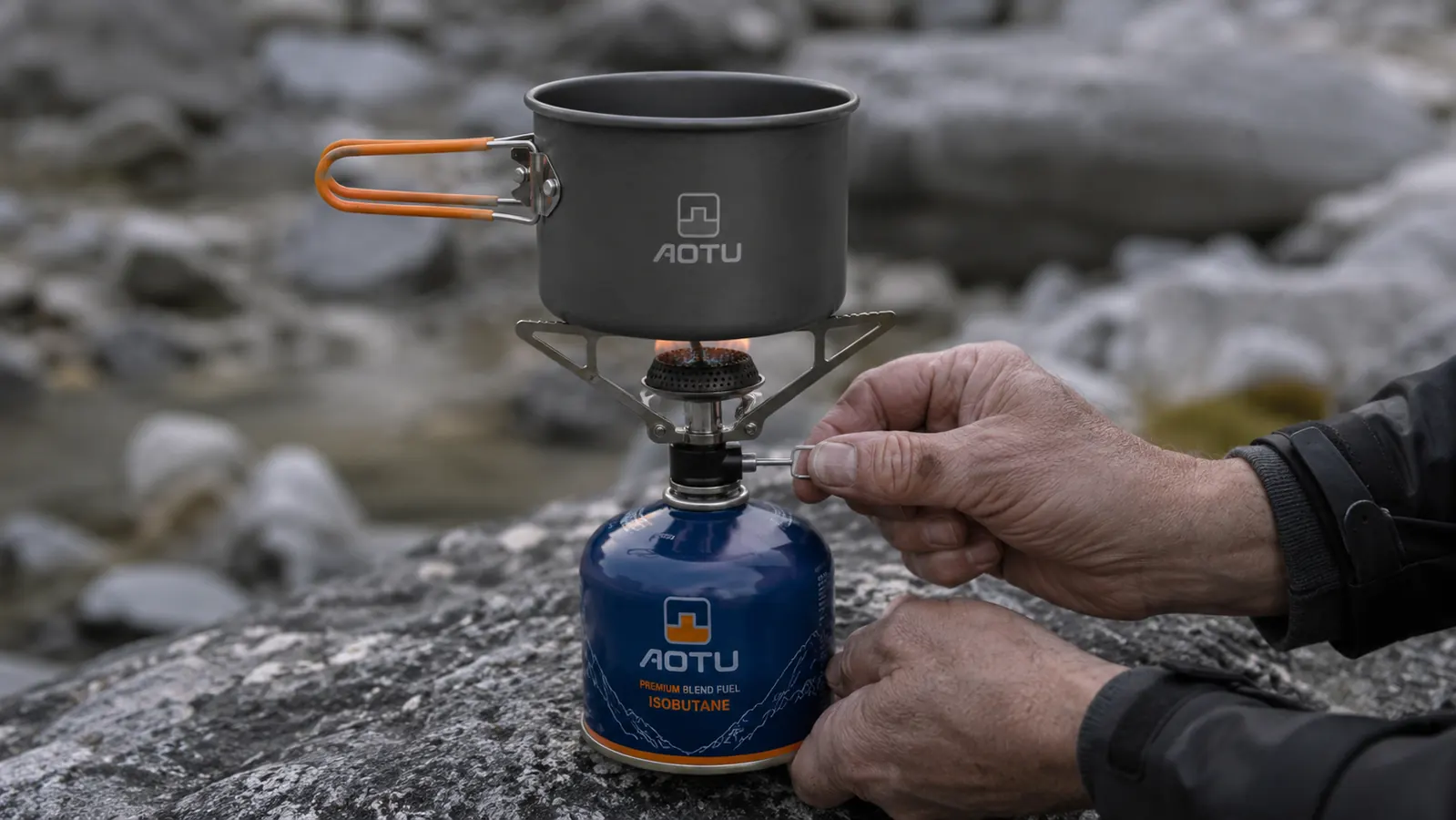
That night at camp I set up behind a boulder to cut the wind, cupped my hands around the stove, and hit the piezo igniter. The AOTU lit on the second click. Blue flame, steady despite the gusts, because I had the windbreak working right. I filled my pot with snow I melted in stages, which takes longer at altitude because water boils around 194 degrees up there instead of 212, but the stove held the flame the whole time without sputtering or stalling. Twenty minutes later I had boiling water for two pouches of freeze-dried chili mac, plus enough left in the pot for two cups of instant coffee. Dale looked at me like I had pulled off something impressive. I told him it was a twelve-dollar stove. He did not believe me.
Here is what I have figured out about the AOTU after using it across a lot of different conditions. The stove itself is simple: a brass burner head on folding support arms that screw directly onto a standard isobutane or isobutane-propane mix canister. That is the whole unit. There is no attached pot system, no built-in windscreen, no heat exchanger. You get a burner and a valve and a piezo igniter. The simplicity is the point. It packs into a shirt pocket and weighs next to nothing. For backpacking, where every ounce gets felt over ten miles, that matters. I pair it with a 750ml titanium pot and a 110-gram canister for a two-to-three day trip, and the whole cook kit goes into a half-liter stuff sack inside the pack. That is it. You can read the full performance breakdown in the long-term AOTU stove review if you want the spec-by-spec version.
The AOTU lit on the second click at 10,000 feet in 28-degree wind. I have used stoves three times the price that would not do that.
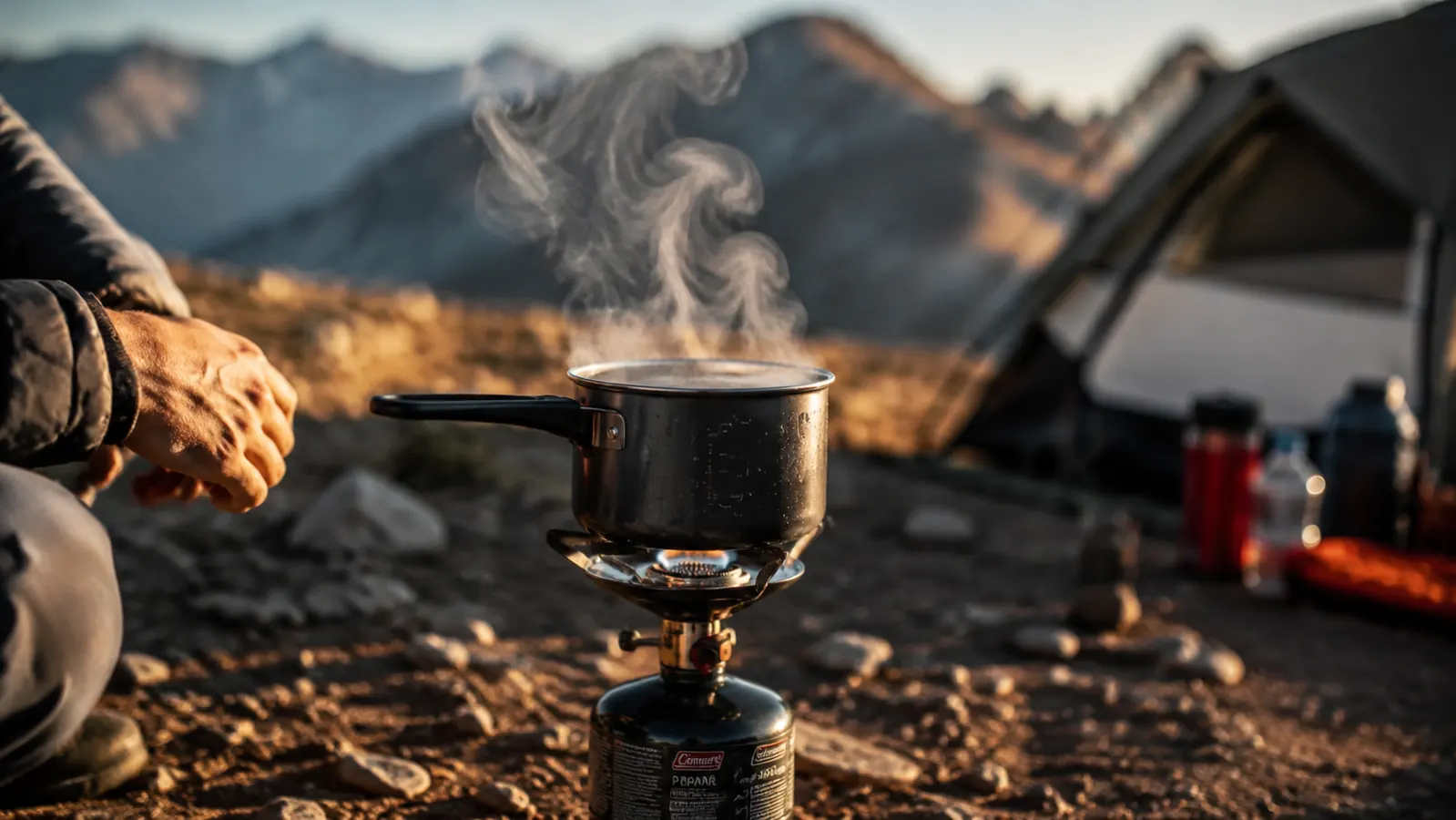
What the stove cannot do is hold its own in direct wind without some kind of windbreak. That is not a knock specific to the AOTU; it is a physics problem with any open-flame burner at altitude. Without the boulder I was crouched behind, that flame would have been guttering all night and the boil time would have doubled or tripled. If you camp in exposed terrain, you need a plan for wind management: a folding windscreen, a natural break, or a body position that blocks the gusts. The stove rewards people who camp smart. It punishes people who set it up in the open and expect it to perform the same as it does at sea level. For a full system on cooking efficiently in the field, the guide to cooking hot meals backpacking walks through all of it.
The other thing to know: altitude genuinely affects boil time. At 10,000 feet I was adding roughly eight to ten minutes to every boil compared to what I get at lower elevation campsites. That is not the stove failing; that is the thinner air and the lower boiling point. I have seen people one-star camp stoves in reviews because their water took too long to boil at high altitude. It was not the stove. Plan for longer cook times, bring a windbreak, and you will be fine. The AOTU has enough BTU output that it compensates reasonably well for altitude if you eliminate the wind variable. Between the stove and the pack I had loaded for this trip, everything worked together. If you are wondering what pack gives you the right balance of capacity and carry comfort for trips like this one, the Teton 55L Scout backpack review is worth reading before you buy.
What I'd Tell You If We Were Sitting at My Kitchen Table
If you are shopping for a backpacking stove and you have not spent a lot of time in the backcountry yet, here is the honest version of what I would tell you. Do not overthink it. The expensive integrated systems have their place, but you do not need one to cook a real meal in the field. What you need is a stove that lights reliably, holds a flame in reasonable conditions, and does not weigh enough to make you leave it at home. The AOTU checks all three boxes. I have used it on fishing trip overnights, deer season base camps, three-day ridge walks, and now a 10,000-foot October push in the wind. It has never not lit. It has never leaked. The one burner arm on mine bent slightly after I dropped the canister setup on granite, and I bent it back by hand. That is the only field repair it has ever needed. For what it costs, that track record is hard to argue with. Buy a windscreen while you are at it, and learn how to use it. That combination will cook dinner in conditions where a lot of more expensive setups would have you eating cold.
The AOTU stove is what I keep reaching for when the pack needs to stay light and dinner needs to be hot.
Fits in your fist, runs on standard isobutane canisters, and piezo-ignites in the cold. Budget-priced and it has earned its place in the pack.
Amazon Check Today's Price on Amazon →