
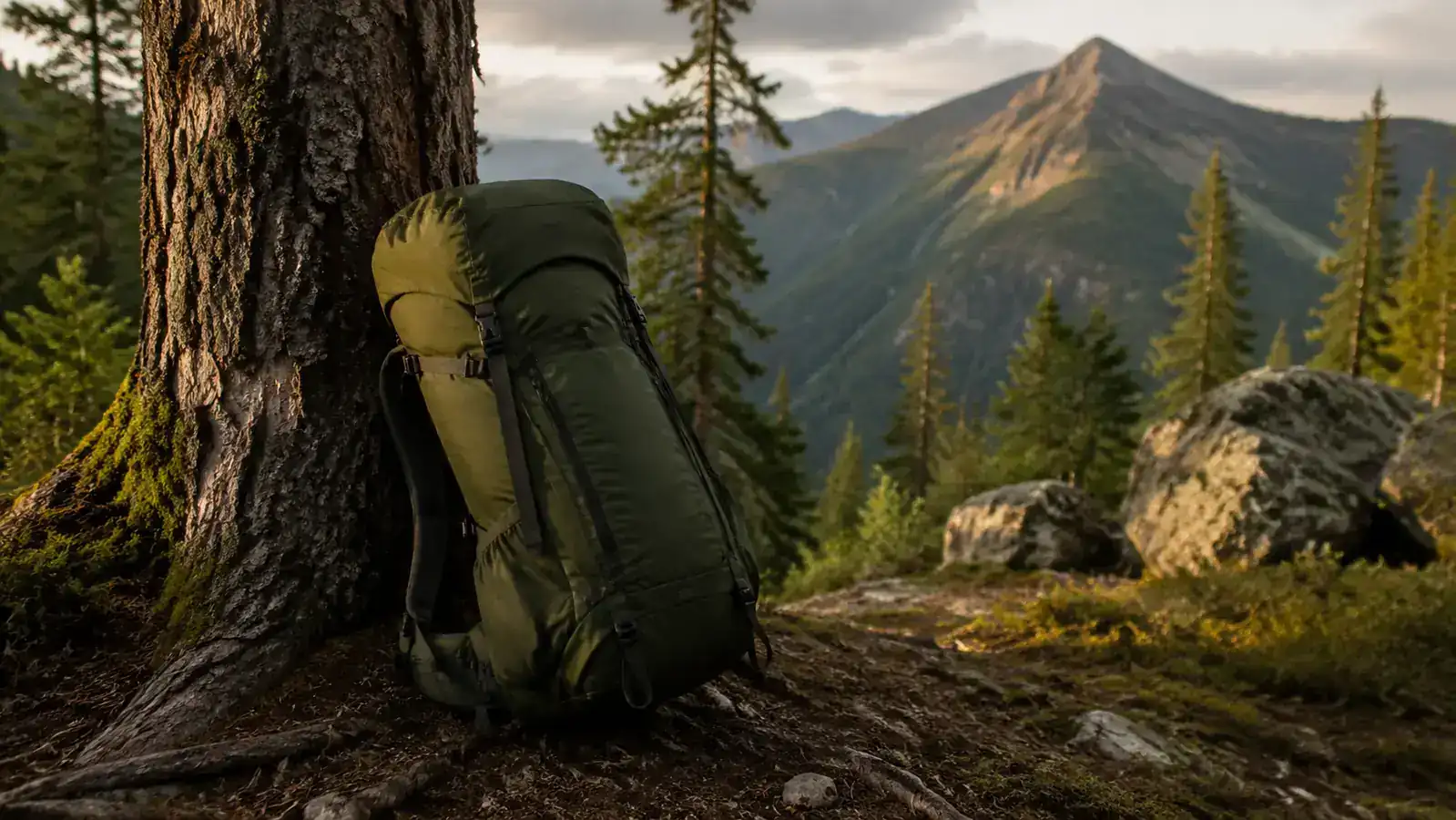
I bought the TETON Sports Scout 55L in late August because I needed one pack that could do everything: three days in the Adirondacks, a four-day whitetail hunting camp in the Alleghenies, and whatever day hikes and weekend camping trips filled the rest of fall. My old pack was a borrowed external frame from my father-in-law that weighed close to six pounds empty. It was time. I paid in the budget range, which felt like either a smart move or a gamble, depending on what the next few months turned up.
By November I had about 180 miles on the Scout, spread across four distinct trips with loads ranging from a light 22-pound day-hike setup to a hunting camp load pushing 47 pounds with field-dressed meat added on day two. That range told me a lot more than any single overnight would have. Here is what I found out.
The Quick Verdict
A genuinely capable internal frame pack at a price that makes it hard to argue against. The suspension punches above its weight, the organization is better than most packs at double the cost, and the durability held up through a rough fall season. The hip belt padding could be thicker for loads over 40 pounds, and the material is not waterproof, but those are manageable tradeoffs for the price.
Amazon Check Today's Price →If you are loading up for a hunting camp or a multi-day trail trip and do not want to drop premium money on a pack, start here.
The TETON Scout 55L has over 7,900 reviews and a 4.7-star average for a reason. Check today's price on Amazon before it sells out in your size.
Amazon Check Today's Price on Amazon →How I Used It: Trip Log for the Season
Trip one was a three-day loop in the Adirondacks, mid-September. Load was 26 pounds: shelter, sleeping bag, pad, stove, four days of food, water treatment, rain layer, and a mid-layer. Temperature range was 38 to 68 degrees Fahrenheit. Total mileage: 31 miles with one significant ridge crossing.
Trip two was a car-supported base camp in Pennsylvania, early October. I used the Scout as my carry-in pack for setting up camp, then as a day pack during hunting hours. Load varied from 15 to 30 pounds depending on the day. This trip ran four days and gave me a real sense of how the shoulder straps hold up under repeated daily loading and unloading.
Trip three was the test I was most worried about: a four-day deer hunt in the Alleghenies with a backcountry camp three miles from the truck. I went in with 44 pounds of gear. On day two I tagged a spike buck and had to repack with roughly 25 extra pounds of boned-out meat wrapped in game bags and lashed to the exterior. That walk out was five miles with elevation change. The pack held together. My lower back was not thrilled, but nothing failed on the gear side.
Trip four was a quick two-night camping trip in November with my son. Relaxed, 22 pounds, mild weather. A good trip to evaluate comfort without the pressure of hunting camp weight.
Suspension and Fit: Better Than the Price Suggests
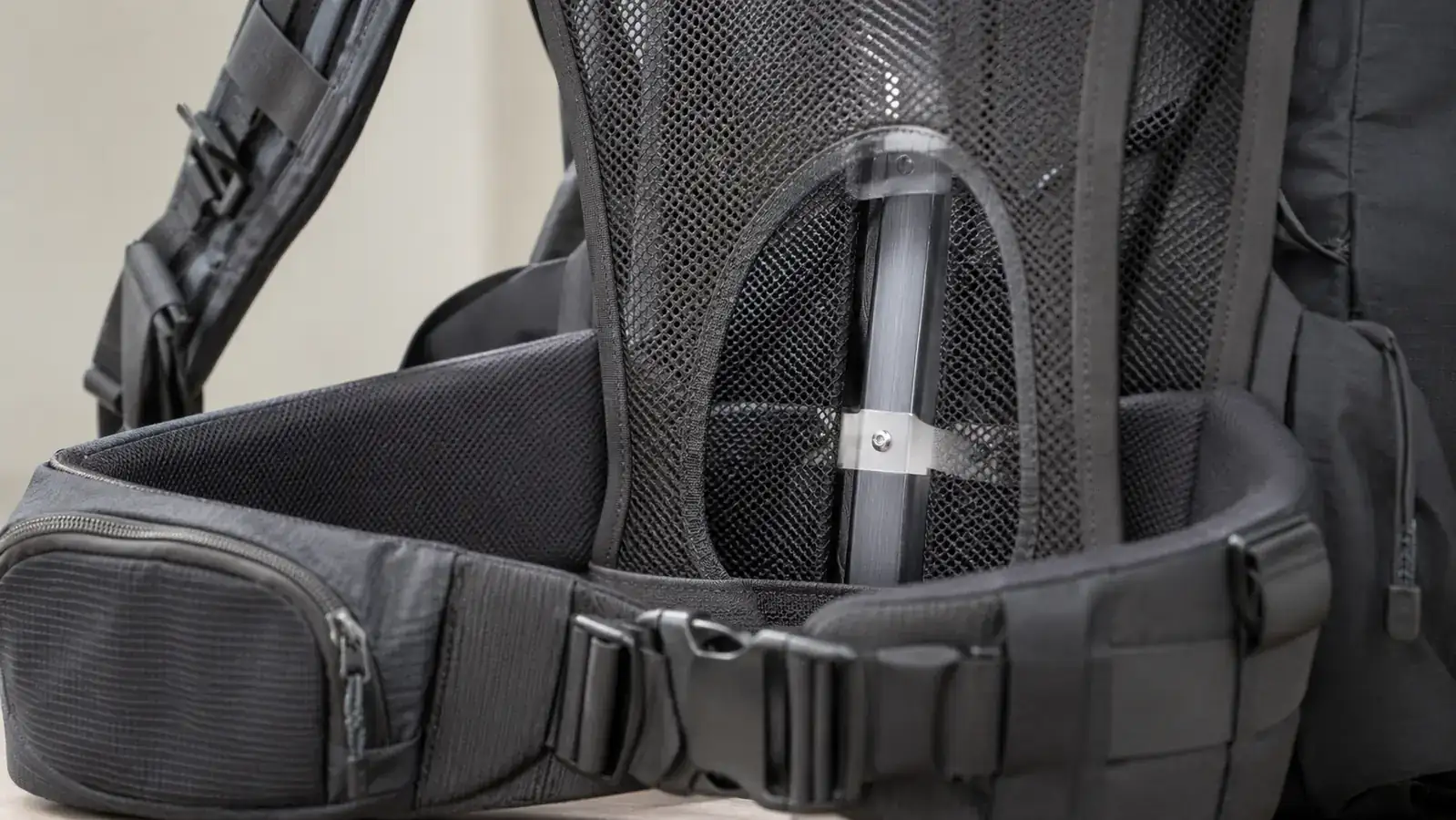
The Scout uses aluminum stay bars that you can bend to match your back curve. Most budget packs skip this entirely and give you a fixed frame that rides like a board. TETON includes a simple heat-and-bend instruction, and it takes about two minutes. Once I shaped the stays to my torso it made a noticeable difference in how the load transferred to my hips. That is not something I expected at this price point.
The torso length is adjustable via a sliding shoulder harness system. I am a 6-foot-1 guy with a longer-than-average torso and found a fit that worked well without the pack riding too high or the hip belt sitting on my hip bones wrong. Shorter torso frames should look at the smaller Scout models, but the standard size has enough range for most adults.
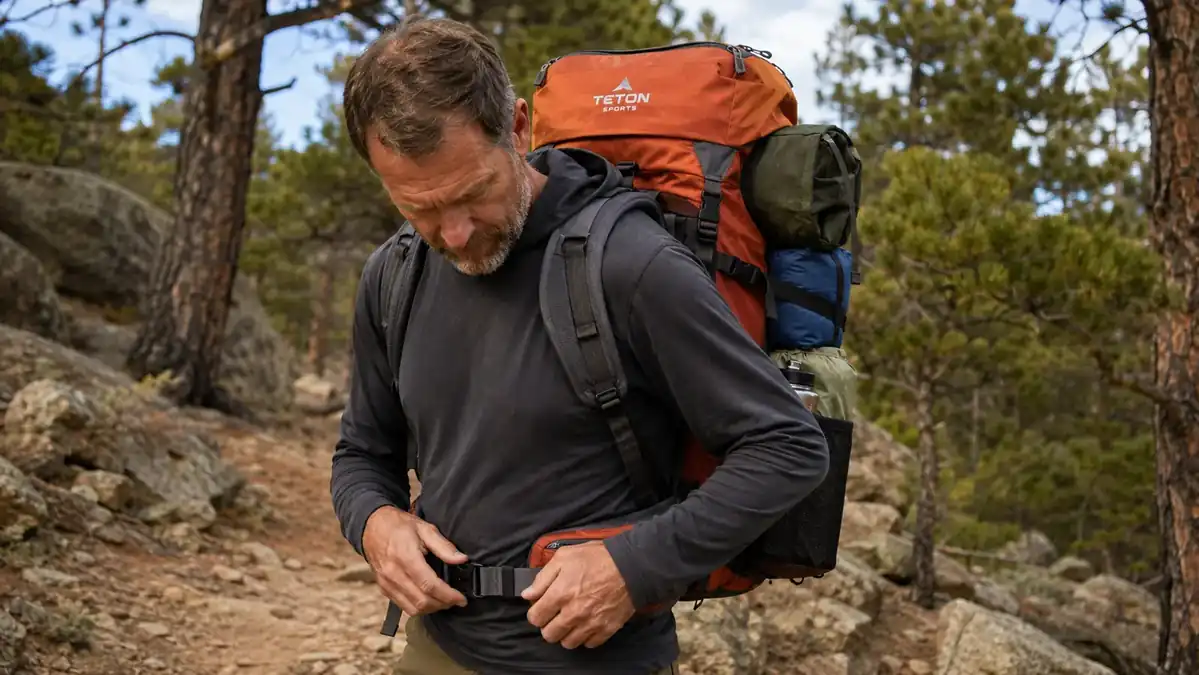
Where the suspension shows its budget roots is hip belt padding. Under loads in the 25 to 35 pound range, it is comfortable for a full day. Push past 40 pounds and you start feeling it after a few hours. The padding compresses under heavier loads more than a premium pack would. If you are regularly carrying 45-plus pounds, you should know going in that this is not a Deuter or Osprey level hip belt. But for the typical hunter, hiker, or weekend camper, it is more than adequate.
Organization and Access: More Pockets Than I Expected
The main compartment on the 55L version is large and divided into upper and lower sections by a removable divider. I kept the divider in place most of the time, using the bottom for my sleeping bag and the top for everything else. The divider zips out completely in about 30 seconds if you want one big open space.
There is a large front shove-it pocket that runs the full height of the pack. This is where I stuffed my rain layer every morning on the hunting trip, because it gets into that pocket without any organization required. During camp trips it holds a sleeping bag liner, extra fleece, or anything I might need without digging through the main bag. Below that is a separate zippered compartment that works well for wet gear or anything you want isolated.
Two large side pockets hold water bottles with room to spare. I run a 32-ounce Nalgene on each side and can still fit a small stuff sack or a pair of gloves in the same pocket. Hip belt pockets are included, which is genuinely useful for hunting: phone, calls, lip balm, lighter. The size is adequate for most people unless you run a large smartphone with a thick case.
I tagged a spike buck on day two, reloaded 25 pounds of boned-out meat, and walked out five miles. Nothing on the pack failed. That tells you what you need to know about whether it is built to actually carry weight.
Durability After a Hard Season
The main fabric on the Scout is 210D ripstop nylon, which sounds thin but performs better than the number implies. Over the course of the season the pack scraped against granite in the Adirondacks, dragged through wet brush on the hunting camp access trail, and got tossed in and out of a truck bed more times than I can count. I have no tears, no delamination on the base, and no broken zippers. The two main compartment zippers have some stiffness at the start of each pull, which I attribute to field debris working into the slider. A wipe-down with a damp cloth cleared it up.
The stitching at the shoulder harness attachment points and the hip belt junction both look solid after 180 miles. These are the stress points that blow out on cheap packs. TETON reinforces these with bar-tack stitching and they have not shown any sign of pulling. The buckles are plastic, which I was watching, but all of them are still functional and none have cracked in cold temperatures.
One thing to know: the pack is not waterproof and the DWR coating is light. In a sustained rain on the Adirondacks trip the outer shell started to wet through after about 45 minutes. Nothing inside got soaked because I line the main compartment with a dry bag anyway, but you should do the same. The included rain cover helps in a pinch but it is better than nothing rather than a full solution. If you are doing a lot of wet-weather backpacking, plan on a dedicated pack liner.
Packing It: What 55 Liters Actually Holds
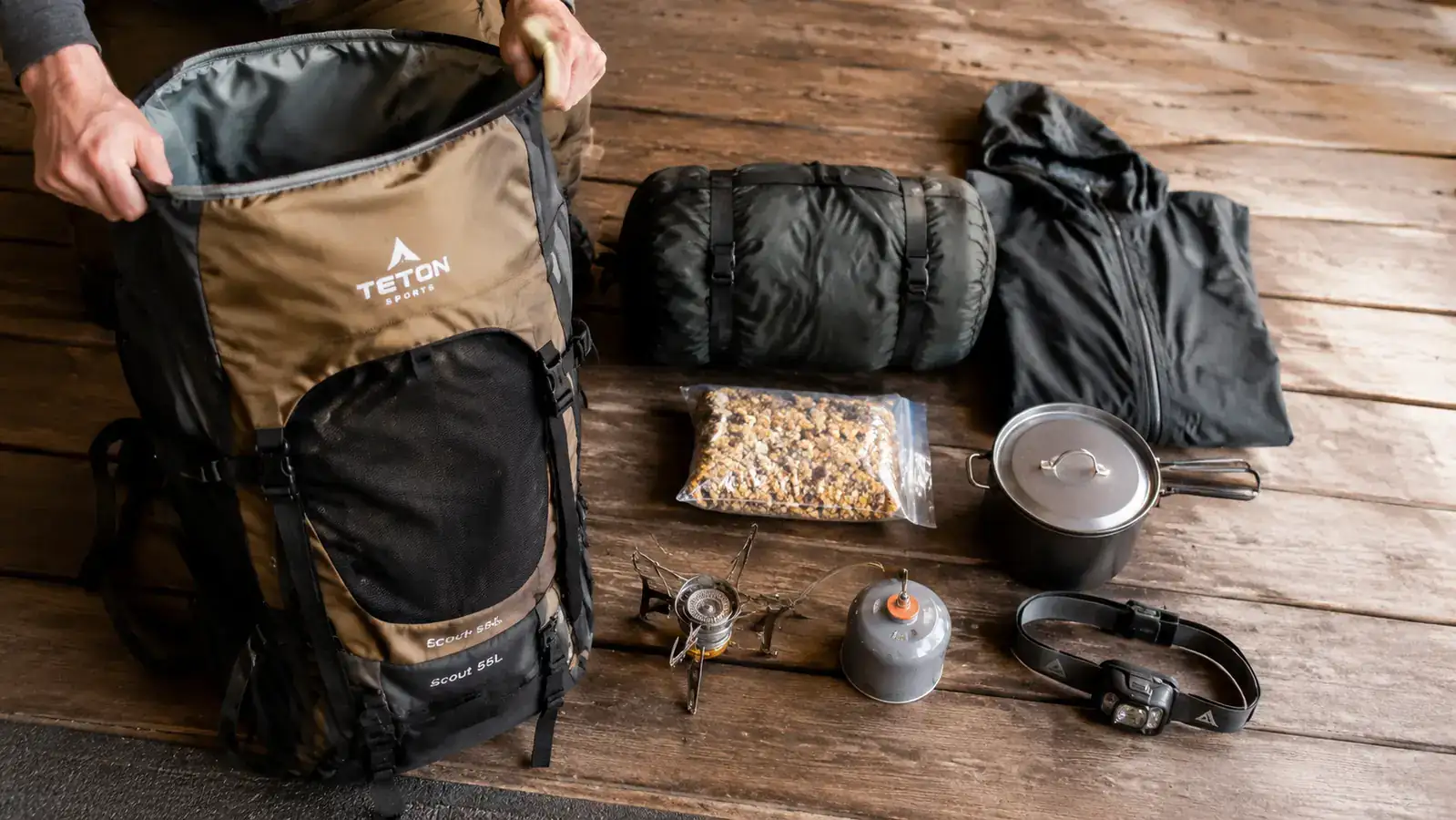
For a three-night backpacking trip with a 30-something-pound target load, 55 liters is comfortable but not excessive. My trip-three hunting load hit 44 pounds and filled the pack to about 80 percent capacity, with the remaining space used for overflow items lashed to the exterior compression straps. For a guide to the exact packing order I used across these trips, see our article on how to pack a 55L backpack for a camping weekend.
The external compression straps are a standout feature. There are four: two side straps and two top lid straps. The side straps cinch down the load when the pack is not full, which keeps gear from shifting. The top lid has a small zippered compartment of its own, good for a map, compass, wallet, or anything you need at a trailhead without digging into the main bag. I used this pocket every single trip.
Alternatives I Considered
Before buying the Scout I looked seriously at the Osprey Atmos AG 65. Osprey's anti-gravity suspension system is genuinely better for all-day comfort under heavy loads, and the fit adjustability is more refined. The problem is the price gap. You are looking at roughly three times the cost of the Scout for the Osprey. If I was guiding trips or spending 60 nights a year on trail, I would spend the money on the Osprey without hesitation. For the two to three dozen nights a year most hunters and weekend campers actually log, the Scout holds up fine. For a full head-to-head breakdown, I put together a detailed comparison: Teton Scout 55L vs Osprey Atmos AG 65.
I also looked at the Gregory Stout 65, which splits the difference in price. The Gregory has a better hip belt at that load range and more refined shoulder yoke adjustment. But it does not have the Scout's external frame access or the sheer number of pockets. For hunters who need gear accessible without dropping the pack, the Scout's layout wins.
What I Liked
- Adjustable aluminum stay bars bend to your back curve, which most budget packs do not offer
- Torso length adjustment system fits a wider range of builds than fixed-harness competitors
- Organization is exceptional for the price: shove-it pocket, separate wet pocket, two generous side pockets, hip belt pockets, top lid compartment
- External compression straps handle overflow loads and keep the pack stable when it is not fully packed
- Suspension transfers load to the hips effectively for loads up to around 38 pounds
- Durable enough to handle 180+ miles, rough terrain, and a heavy meat-carry without structural failure
- Lifetime warranty from TETON Sports, which means something
Where It Falls Short
- Hip belt padding compresses noticeably under loads above 40 pounds, uncomfortable on long carries
- DWR coating is light; the shell wets through in sustained rain without a liner
- Plastic buckles work but feel less substantial than metal hardware on premium packs
- Shoulder straps are on the firmer side and may need break-in time for sensitive shoulders
- The included rain cover is minimal, more of a gesture than a reliable weather solution
Who This Is For
The Scout 55L is the right pack if you are a hunter, weekend camper, or section hiker who goes out 10 to 30 nights a year and wants a capable, well-organized pack without paying premium prices. It handles the full range of activities in its intended niche: deer camp, elk scouting trips, fishing access hikes, weekend backpacking. The internal frame means it carries more efficiently than an external frame and handles trail obstacles without swinging wide. If you want to understand why the internal frame format matters for camping trips beyond an overnight, check out our breakdown of 10 reasons an internal frame backpack beats a daypack for camping trips.
This pack is also a smart first internal frame pack for someone stepping up from a budget external frame or a school-style daypack. The adjustable harness means you are not guessing on fit the way you would with a fixed-harness budget pack. The price leaves room in the budget for other gear you actually need.
Who Should Skip It
If you are regularly carrying 45 pounds or more for eight-plus hours a day, go spend the money on an Osprey or Gregory with a true suspension system. The Scout will carry that load without failing, but your body will feel it in your hip bones and shoulders by day two. Also skip it if you are doing technical mountaineering or winter expeditions where an ultralight frame pack or a specialized alpine pack is required. The Scout is a three-season workhorse, not a winter or technical climbing pack. And if you are an ultralight backpacker counting ounces, the Scout's 5.1-pound base weight is going to be a non-starter.
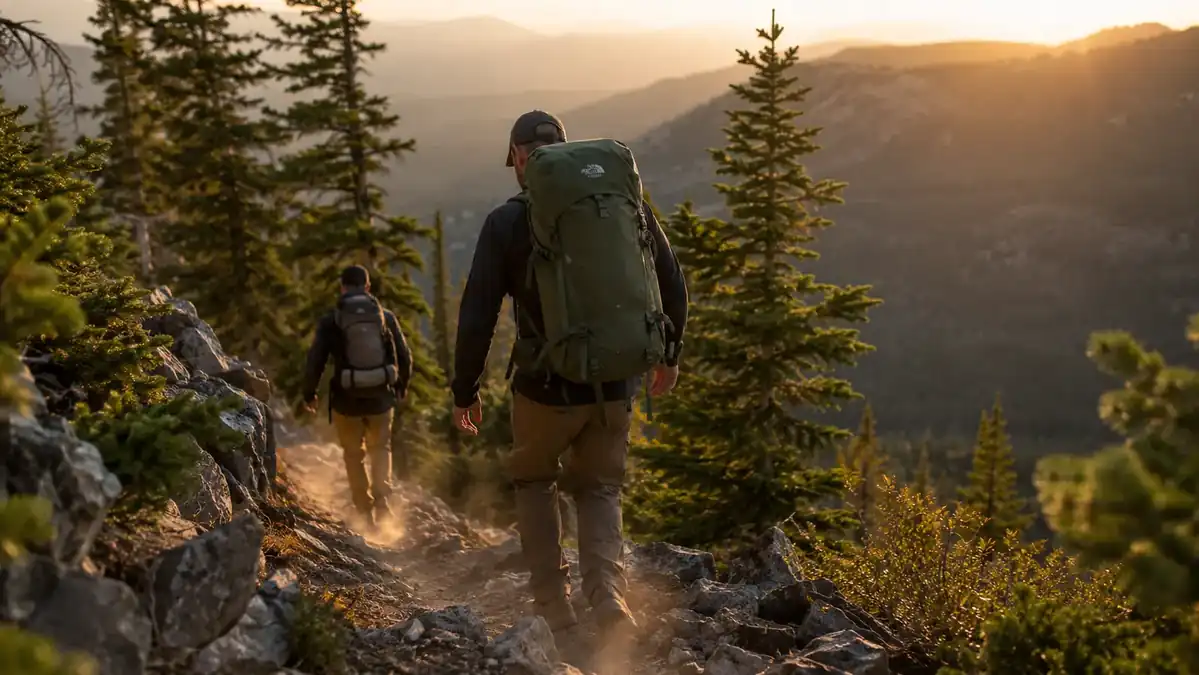
One season, four trips, 180 miles. The Scout held up every time.
If you are looking for a capable, well-organized internal frame pack that does not cost as much as your rifle scope, the TETON Sports Scout 55L is worth a long look. It carries hard, organizes well, and TETON backs it with a lifetime warranty. Check today's price and availability on Amazon.
Amazon Check Today's Price on Amazon →