
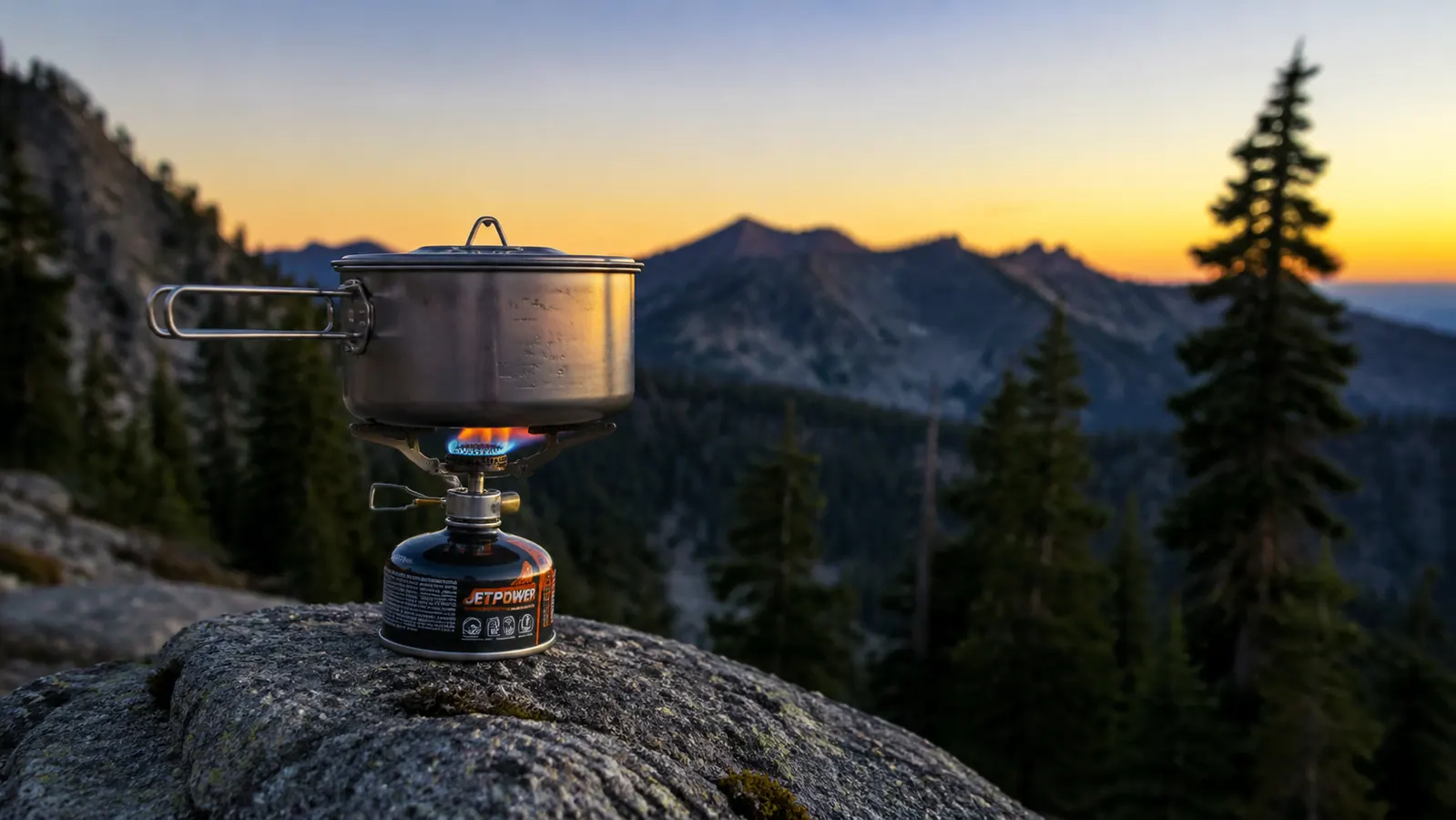
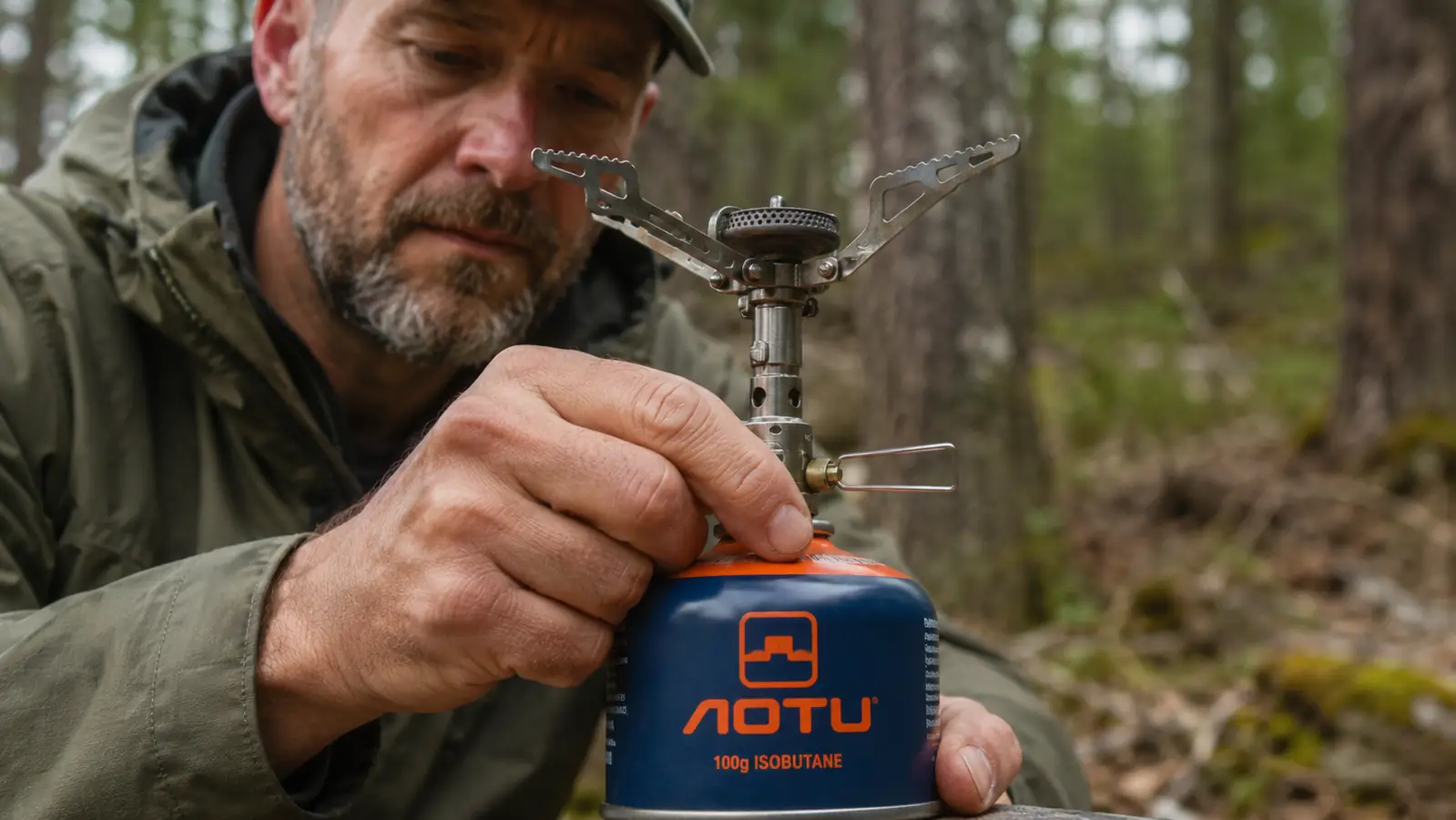
Three years ago I picked up the AOTU backpacking stove because my regular fishing buddy dared me to find something lighter than what I was already carrying. I had been lugging a two-burner Coleman into base camp and calling it "minimalist." That dare sent me down a rabbit hole, and the AOTU was the stove that won out after sorting through the budget options. It weighed 95 grams, packed into a stuff sack the size of a golf ball, and threaded onto a standard isobutane canister in about four seconds. At that price point I expected to use it a few times before something broke. Instead, it has shown up on over 50 trips: ridge camps in the Cascades, hunting base camps in October, a wet June weekend in the Smokies, and a dozen overnight trout-fishing overnights in conditions that ranged from dead-calm to gusty and cold.
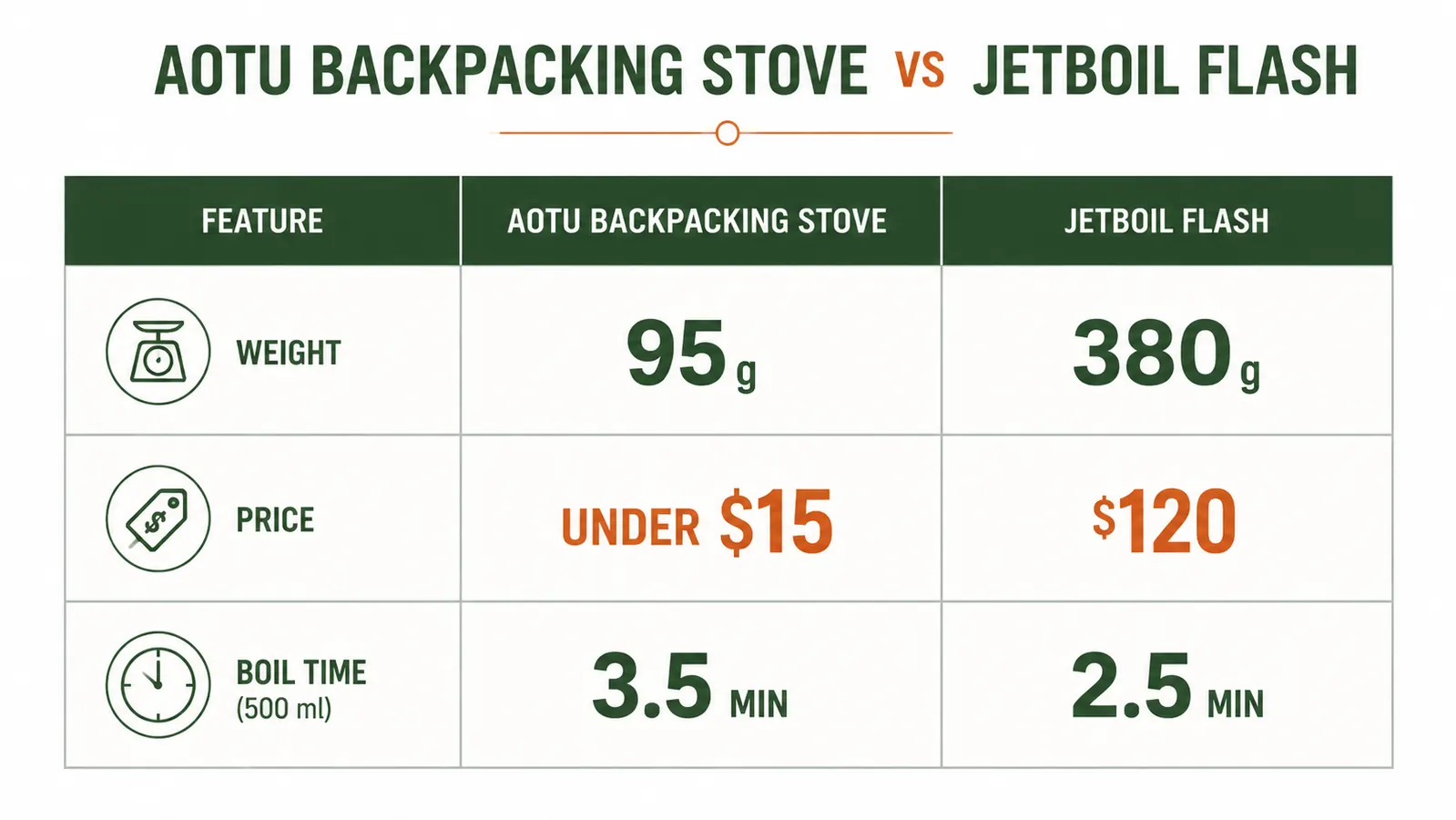
The AOTU portable camping stove with piezo ignition is a canister-top backpacking burner, not a two-burner car-camping unit. That distinction matters more than people realize. This is a backcountry tool designed for one thing: getting water boiling fast on a lightweight setup, whether you are rehydrating a freeze-dried meal at 9,000 feet or making coffee before a pre-dawn elk push. It is not trying to compete with a propane setup you roll out of the tailgate. If you want to understand how it compares to the premium option most guides recommend, I break that down in my AOTU vs Jetboil Flash comparison. But for now, here is the full long-term story.
The Quick Verdict
Pound-for-pound the best value backpacking stove in production. The piezo ignition works, the pot supports hold a 1L titanium pot steady, and nothing has cracked or seized after three full years of canister-top use. Minor wind sensitivity and an overly sensitive valve are the only real knocks.
Amazon Check Today's Price →If you are tired of skipping hot meals because your stove weighs too much to bother bringing, the AOTU fixes that problem at budget pricing.
Over 6,500 verified buyers and a 4.6-star average. Check current pricing before the next trip.
Amazon Check Today's Price on Amazon →How I Have Used It
My first real test was a two-night solo trip in the Cascades in late September. Temps dropped to around 38 degrees overnight, and I was above 7,000 feet. I brought a 100g isobutane canister, a 750ml titanium pot, and the AOTU. Morning one: piezo lit the burner on the second push (the first push primed the gas line). Water boiled in about three and a half minutes. Not as fast as a Jetboil, but hot oatmeal before sunrise felt like a different kind of trip than the cold-pack granola I had been eating. That trip sold me on always having a small backpacking stove in the kit.
Since then the AOTU has come along on every trip that involves spending a night away from the truck. I have used it in eastern Oregon high desert in August, where the air is dry and thin and any small burner runs hot. I have used it in the Smokies in June humidity, which is basically the opposite environment. I have had it out in wind that made the flame stand sideways, which is where it struggles most. And I have used it at hunting camp in October, where cold fingers and cold mornings are the main challenge. Across all of that, it has never failed to start. It has never leaked. And it has never lost a pot support screw or clip, which is a common failure point on cheap canister stoves.
One thing I learned over multiple trips: always bring a lighter as a backup regardless of what stove you carry. The AOTU piezo is reliable, but any ignition system can fail in extreme cold or if the flint gets wet. It is not a knock on AOTU specifically, it is a backcountry rule that applies to every canister stove I have ever owned.
What I Actually Like: The Honest Version
The weight is the headline. At 95 grams, this is lighter than almost every other option I have used, including stoves that cost four or five times as much. When you are already carrying a tent, sleeping bag, pack, food, water filter, and camera gear, every gram decision matters. A stove that weighs less than a full water bottle's cap is one you will actually bring. That sounds obvious until you leave the heavy stove in the truck because you told yourself it was just a day hike, and then the day hike turns into an unplanned overnight.
The folding pot supports genuinely work. On cheaper canister stoves I have used, the pot supports either wobble or are set too narrow for anything larger than a single-serve cup. The AOTU supports fold out evenly and hold a standard 1-liter titanium pot without wobble at a boil. I have cooked on uneven rock surfaces by shimming the canister slightly and had zero tip-overs in three years. For a stove that costs this little, that stability surprised me.
The gas valve has more adjustment range than I expected. You can run it wide open for a fast boil, dial it back to a simmer for rehydrating something that scorches easily, or run it low to stretch a canister over multiple days. A lot of budget stoves only have two settings: "on" and "off." The AOTU gives you real throttle control, which matters when you are actually cooking food rather than just boiling water.
At 95 grams, this is the stove I actually bring on every trip. The stove I used to leave in the truck because it felt too heavy to justify is gone. That one decision is why I eat hot food in the backcountry now.
Where It Falls Short
Wind is the AOTU's main weakness. There is no integrated windscreen on the burner head itself, so in any real wind you need an external screen or you are going to waste fuel and patience waiting for water that barely gets hot. I carry a homemade foil windscreen that weighs about 8 grams and cost nothing. With that screen in place, the stove performs fine even in moderate gusts. Without it in significant wind, boil times stretch out and you burn through canister gas faster than the specs suggest. If you camp in consistently exposed sites, that is worth knowing going in. For more detail on cooking strategy with a lightweight stove in variable conditions, see how to cook hot meals backpacking with a lightweight stove.
The gas valve is sensitive enough that you can overshoot a simmer and accidentally crank it to full on your first few uses. After a few trips it becomes second nature, but the first time you cook something that burns quickly, you will get a lesson in fine-motor control with cold fingers. I burned my first batch of instant mashed potatoes on a cold October morning because I misjudged the valve. Lesson learned in about three bites.
Altitude performance dips noticeably above 10,000 feet, but that is true of every canister stove and has more to do with the isobutane canister itself than the burner design. The gas mixture in a standard canister loses vapor pressure as temperature drops and altitude rises. Pre-warming the canister in your jacket pocket before a cook is a trick that helps at altitude with any canister-top stove, not just this one. It is not a specific AOTU problem, but worth calling out for anyone planning high-mountain trips.
How It Compares to Stoves I Have Used
I have used the MSR PocketRocket Deluxe, the Snow Peak LiteMax, and the Jetboil Flash at various points. The AOTU is not better than any of them in absolute performance terms. The Jetboil boils faster. The MSR has a better windscreen and a more refined valve. The Snow Peak is lighter and more packable at a professional level. But all three cost significantly more. The AOTU costs a fraction of any of them. The question I kept asking was: does the performance gap between a budget stove and a premium stove justify paying many times as much? On a solo trip where you are boiling water for oatmeal and coffee, the honest answer is no. The AOTU does what a canister stove is supposed to do, consistently, without drama, at a price that makes it a throwaway kit item rather than a precious piece of gear you stress about damaging.
The only time I genuinely reached for a premium stove over the AOTU was a late-October elk camp at 11,000 feet with overnight lows in the mid-20s. At that altitude and temperature, the canister gas struggled regardless of stove head quality, and I was cooking for multiple people, which changes the calculus. For solo use in three-season conditions below 10,000 feet, the AOTU has yet to give me a real reason to spend more. If you are on the fence about what format of stove makes sense for your trips, the 10 reasons a backpacking stove should be in every camper's kit breaks down exactly when this type of stove earns its place.
Three Years of Durability: What Held and What Did Not
The burner head itself shows zero visible wear after three years. The brass jet tip looks the same as it did out of the box. The folding pot support arms have been folded in and out well over 100 times and none of the pivot points have loosened or bent. The piezo ignition button has a slight click that feels less crisp than it did new, but it still fires reliably. The gas valve knob has developed a very slight scratch from being packed loose a few times, but the seating and resistance feel the same as they always have.
The carry case that came with it, a small mesh bag, started fraying at the drawstring after about a year. That is the only wear item on the whole kit. I switched to a small neoprene pouch I already had and stopped thinking about it. The actual stove hardware has not given me a single problem. Given that this is a machined brass and stainless steel component, I would expect it to outlast a decade of regular use with basic care. Keep the jet tip free of debris by using a thin wire to clear it annually, and store it dry. That is the entirety of the maintenance.
What I Liked
- 95 grams, packs into a fist-sized stuff sack, genuinely ultralight for solo and fast-and-light trips
- Piezo ignition is reliable across three years and 50+ trips, including cold mornings and damp conditions
- Pot supports are stable and hold a 1L pot without wobble, even on uneven surfaces
- Real throttle control from simmer to full boil, not just on-off like cheaper competitors
- Threads onto any standard EN417 canister, compatible with every major isobutane brand
- Budget price makes it a no-stress kit item you can beat on without worrying about resale value
Where It Falls Short
- Wind sensitivity is real: needs a windscreen or boil times suffer and fuel burns fast
- Gas valve is sensitive and easy to overshoot until you develop feel for it, cold fingers make it worse
- Altitude performance above 10,000 feet follows canister gas physics, not a specific defect, but worth knowing
- Carry case is flimsy and will fray within a year under normal use
Who This Is For
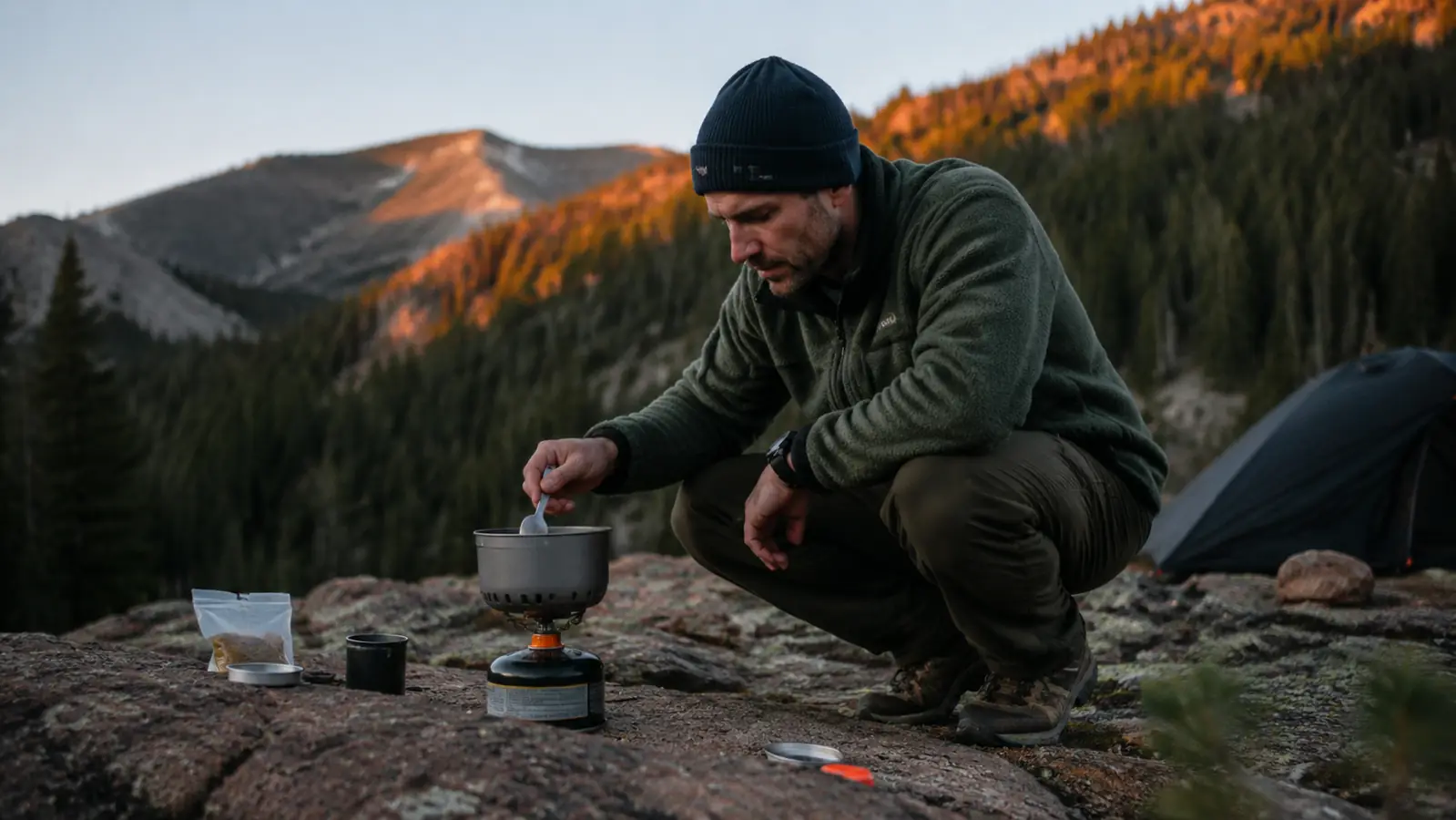
The AOTU backpacking stove is the right tool for the solo or duo backpacker who wants hot food in the backcountry without adding meaningful weight or cost to the kit. If you are doing three-season trips below 10,000 feet, this stove does the job every time. It is also a perfect backup stove for anyone who carries a heavier integrated system and wants a lightweight redundancy option for solo day-to-overnight trips where bringing the full system feels like overkill. Hunters and anglers who camp near vehicle access but want a lighter option for glassing setups or creek-side overnights will find it fits the use case exactly.
Who Should Skip It
If you regularly camp in exposed, windy sites above 10,000 feet, you will fight this stove's wind sensitivity on every trip. A stove with an integrated windscreen or a true all-weather burner head is worth the extra cost in that specific situation. Same goes for anyone cooking for a group: the AOTU is a solo burner, and using it to cook for four people is a slow, frustrating process compared to a two-burner propane setup. And if you are the kind of person who loses sleep over gear durability, paying more for an MSR or Snow Peak with a proper warranty is a reasonable call, even if the AOTU will likely outlast your expectations anyway.
Three years, 50 trips, still firing on the first press. If you need a backpacking stove that goes everywhere and costs almost nothing, here it is.
Rated 4.6 stars by over 6,500 buyers. Lightweight, reliable piezo ignition, works with any standard isobutane canister. Check today's price before your next trip.
Amazon Check Today's Price on Amazon →