
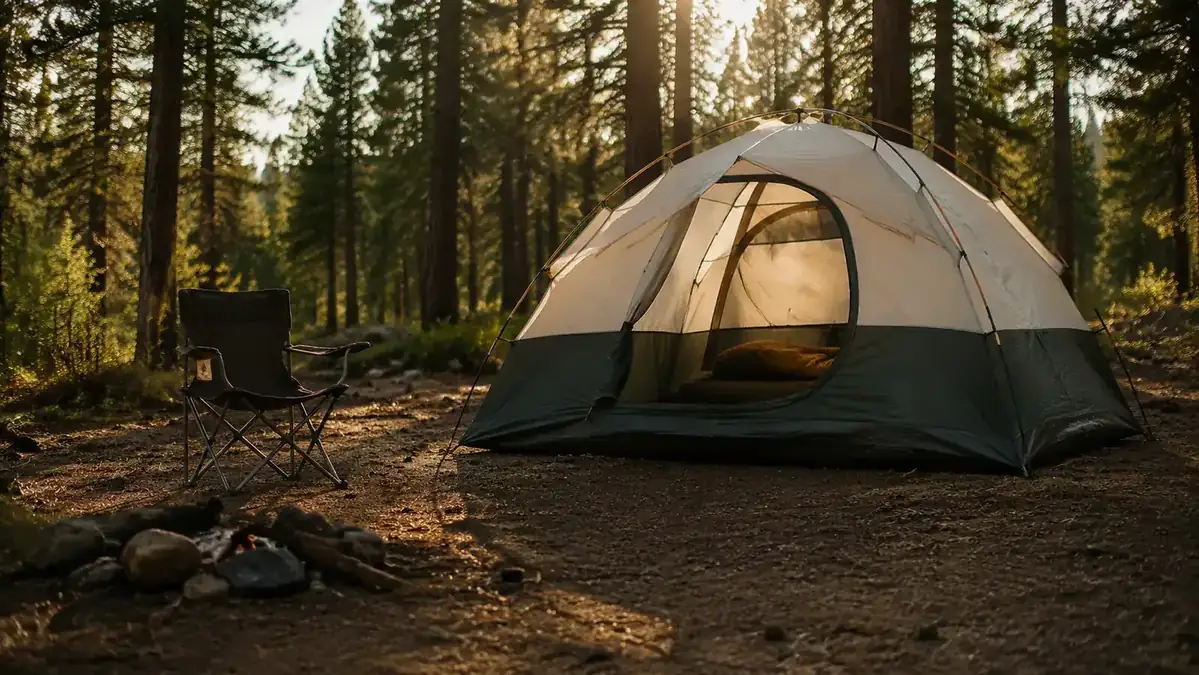
I've slept in both. Cabin tents look great at the camping store, and I get it. Those vertical walls feel like you're buying actual room. Then you're at a real campsite, the wind picks up at 11pm, and you spend the next two hours listening to canvas slap and watching your poles flex like they're about to give. Dome tents aren't glamorous. They don't impress anyone at the trailhead. But after years of camping in both, I've settled on dome every single time. The CORE Dome Tent is what I use now, and it's earned that spot. Here are the 10 reasons I stopped buying cabin tents.
If you're ready to stop fighting your tent and start sleeping in it, this is the one I'd grab.
The CORE Dome Tent has 4.6 stars across nearly 4,500 reviews. Set up fast, handles real weather, and priced affordably. Worth every dollar.
Amazon Check Today's Price on Amazon →Wind Resistance That Actually Works
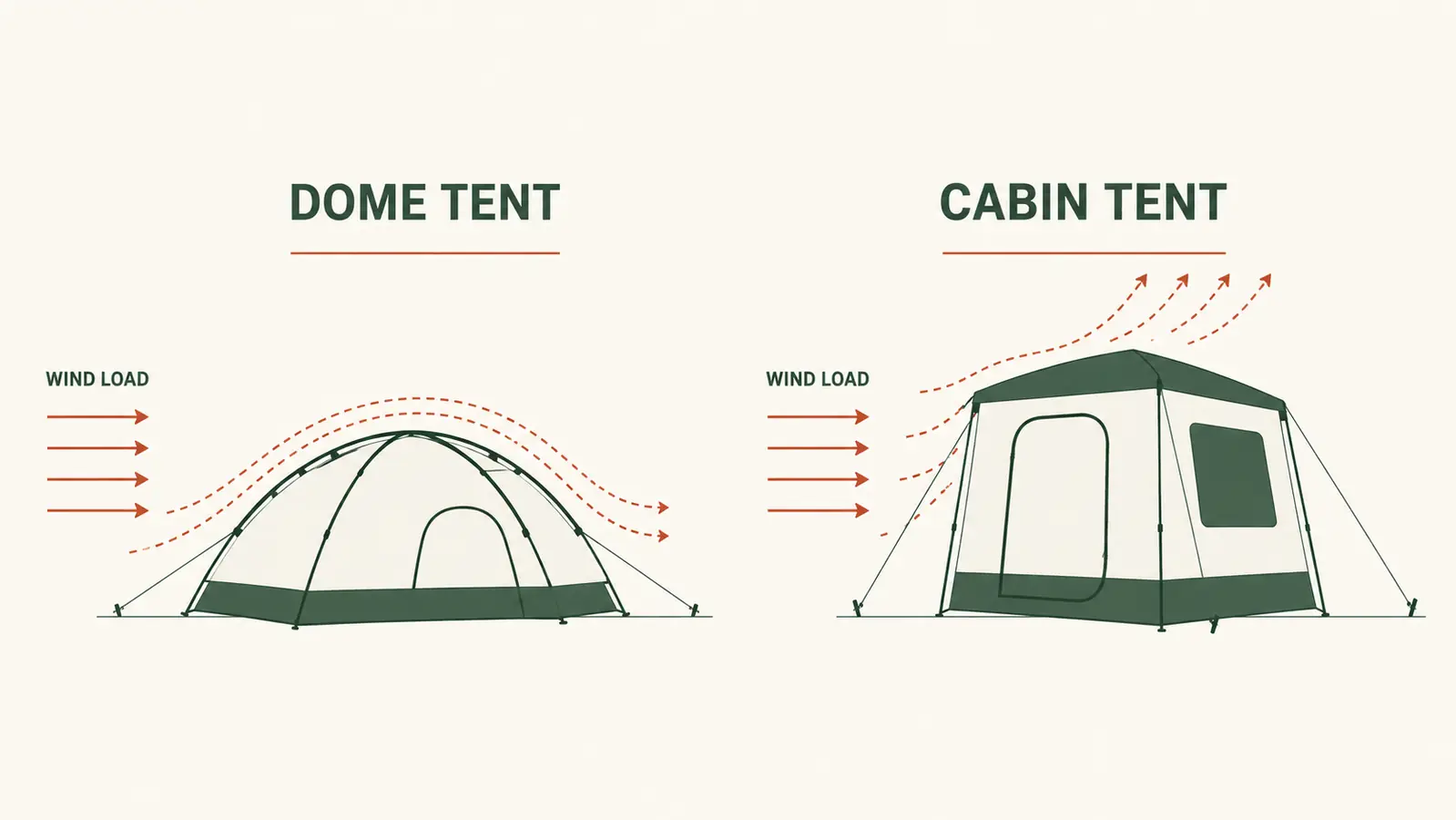
Cabin tents have tall, flat walls. Wind hits a flat wall like a sail. A dome tent's curved profile deflects wind around the structure instead of pushing straight through it. I've had a cabin tent nearly lift off its stakes in a 30mph gust at a lakeside site in Minnesota. My CORE dome tent in the same conditions? Stakes held, structure stayed tight, I slept through it. The geometry is doing work that guy-lines alone can't compensate for.
Solo Setup in Under 10 Minutes
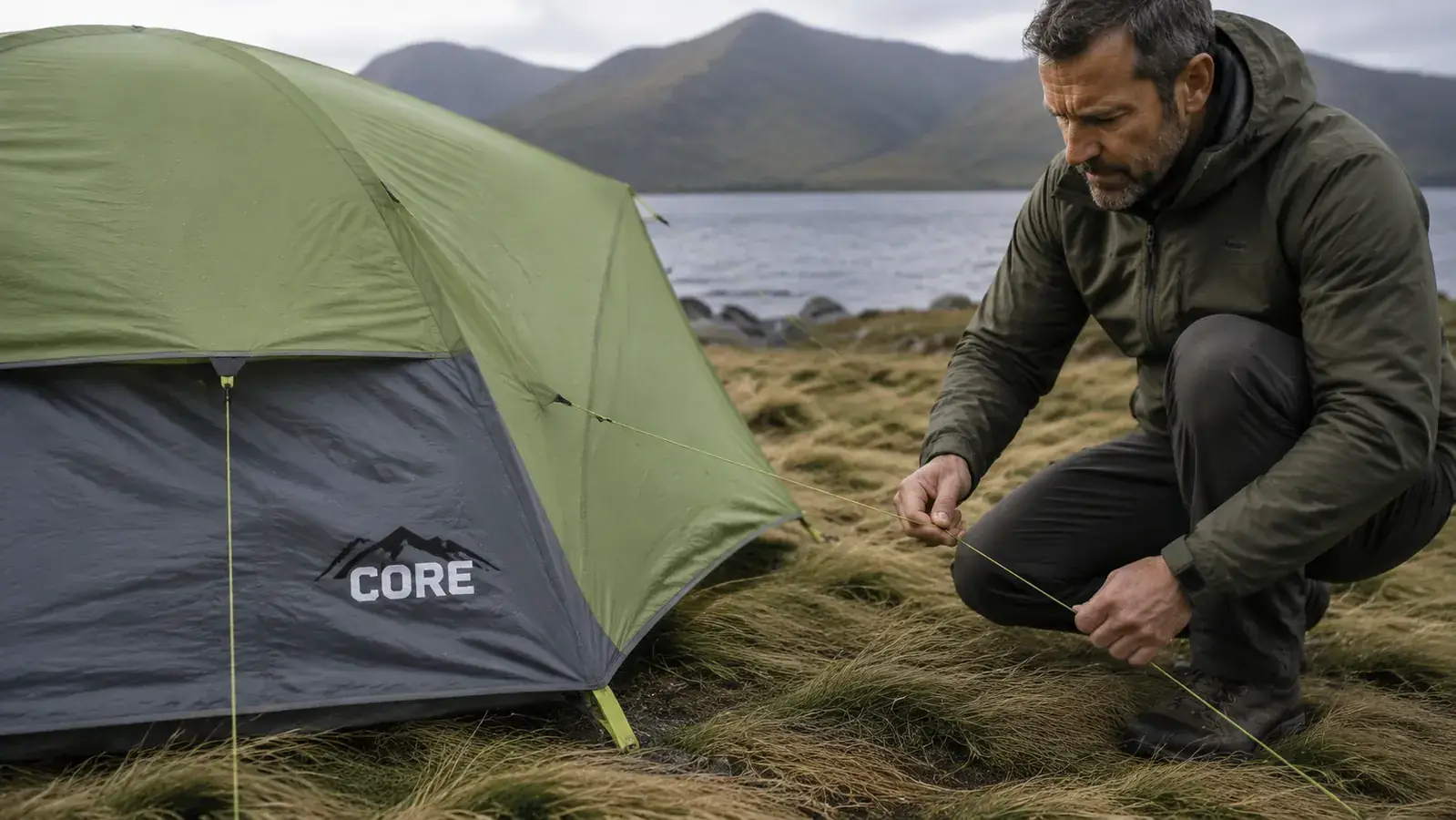
Cabin tents with their separate pole systems, vertical wall inserts, and multiple room dividers are a two-person job if you want to do it in under 20 minutes. A dome tent's two crossing poles and integrated clip system mean one person can have it pitched and staked before anyone else in your group finishes unloading. I've set up the CORE dome solo in around 8 minutes at a dark campsite. If you want the full technique, read through how to set up a camping tent solo and fast.
Rainfly That Covers What Matters
Most cabin tent rainflies cover the roof only. The walls, the vertical sections, the corners where water runs down and pools, those are exposed or barely protected. A dome tent's rainfly drapes over the entire structure all the way to the ground on most models. The CORE dome comes with a full rainfly that extends low enough to keep water from blowing in under the edges. In a real overnight rain, this difference is significant.
Fewer Poles, Fewer Failure Points
Cabin tents have more poles by design. More poles mean more joints, more sleeves to thread, and more sections that can bend, snap, or get left at the campsite. A dome tent's crossing-pole design is mechanically simple. Two poles create structure that's self-supporting before you even stake it down. When something goes wrong in the field, fewer parts means fewer problems.
Packs Smaller for Real Transport
Cabin tents are bulky. Their rigid frame components and larger footprint mean a bigger stuff sack that takes up real truck-bed space. A dome tent compresses smaller and stores in a carry bag that fits in a gear bin without rearranging everything else. If you're hauling camping gear alongside hunting or fishing kit, that space matters. The CORE tent packs down to a manageable size for a family camping tent.
Better Site Flexibility on Uneven Ground
Cabin tents need a large, flat footprint to set up correctly. Their floor plan is rectangular and their vertical walls depend on level ground to stay true. Dome tents are more forgiving. A slight slope or irregular patch doesn't fight the structure the way it does with a cabin tent. On most real campsites, especially dispersed camping or backcountry spots, the ground isn't perfectly flat. Dome geometry tolerates that better.
A cabin tent looks impressive on the showroom floor. A dome tent looks impressive at 2am when it's still standing and you're still dry.
Center Hook for Lighting Without Rigging
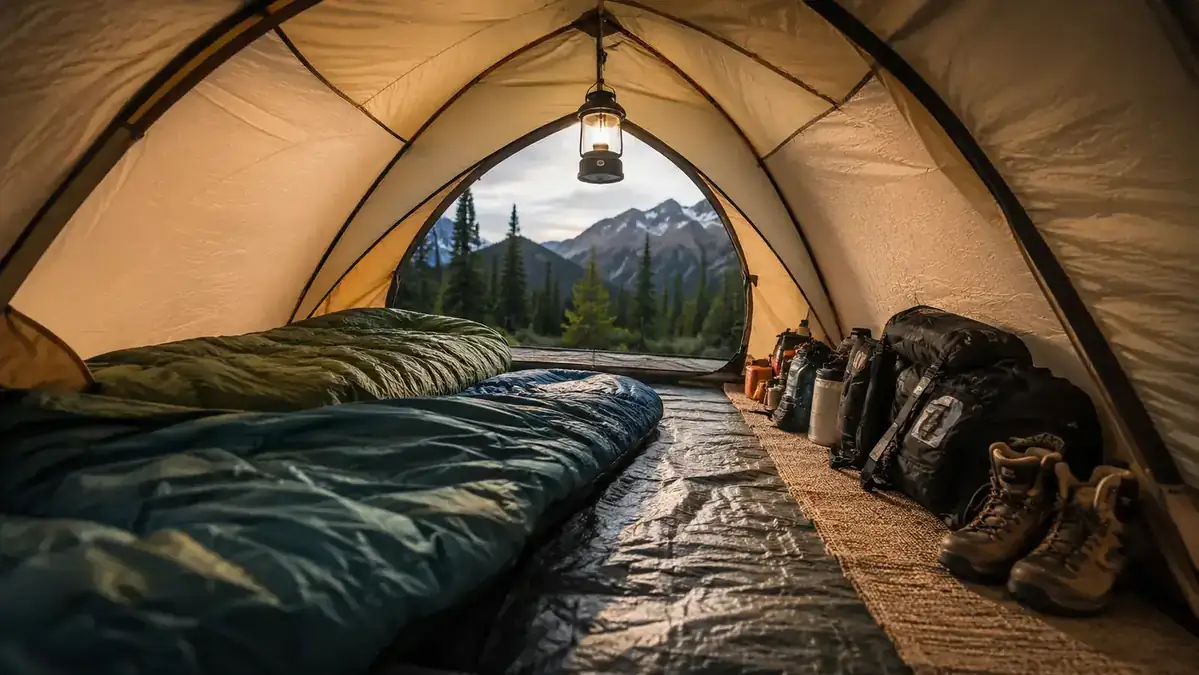
Most dome tents include a center hook at the peak of the interior. Hang a lantern from it and you get ambient light that covers the whole interior without clipping anything to the wall or running a cord somewhere. Cabin tents have ceiling hooks too, but with their larger floor area and vertical walls, a single ceiling light leaves corners dim. The dome tent's curved walls reflect light back down more evenly across a tighter space.
The Structure Stays Taut All Night
Cabin tents with their large, unsupported fabric sections tend to sag. When temps drop overnight, condensation forms faster on slack fabric and drips. A dome tent's curved design keeps the fabric under tension between the poles. Taut fabric sheds condensation better and doesn't flap in the wind the way a loose cabin tent wall does. Less noise, less drip, better sleep.
Easier to Dry Out After Rain
After a wet night, both tent types need to air out before you pack them away. A dome tent dries faster because you can stake the rainfly separately, then leave the inner tent free-standing while it airs. The curved structure lets you prop both components without hunting for trees or poles to drape fabric over. Cabin tent wall sections and their additional dividers take longer to fully dry and take more space to spread out.
Price Buys You Shelter, Not Just Square Footage
A cabin tent at the same price as a dome tent trades weatherproofing and durability for interior room. You're paying for headroom and vertical walls, not better seams, better pole joints, or a better rainfly. For a family camping trip like the one I covered in our first family campout story, what matters at 1am in the rain is waterproofing and structure, not whether you can stand up straight. The CORE dome tent puts that money where it counts.
What I'd Skip
If you need a basecamp for a large group, multiple rooms, and you're always camping at a developed site on flat ground with no wind exposure, a cabin tent makes sense for the extra standing room. But for most campers, most trips, and most real-world conditions, that extra height is working against you. The wind doesn't care how roomy it looks from the inside. I've been in enough cabin tents in bad weather to know which one I'm bringing now.
The CORE Dome Tent proves all 10 of these points on the same camping trip.
Budget-friendly, 4.6-star rating from nearly 4,500 buyers, full rainfly included. If you're replacing a cabin tent or buying your first tent, this is the one I'd start with.
Amazon Check Today's Price on Amazon →