
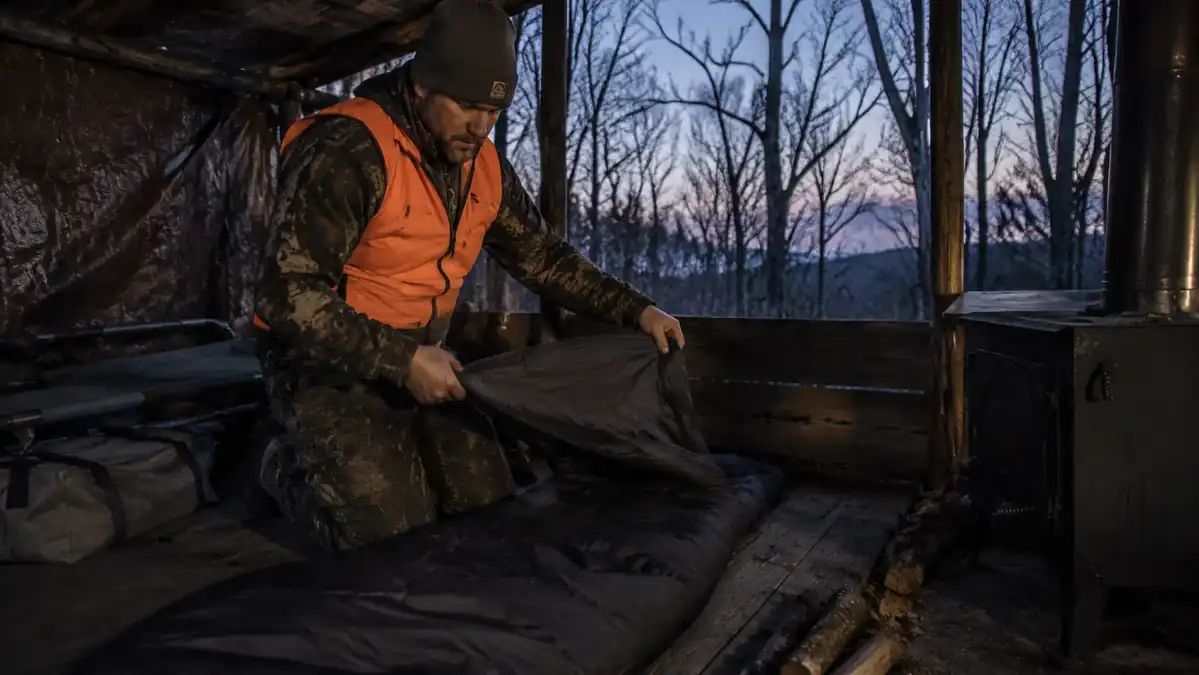
Let me tell you the thing nobody puts in their Amazon review. I bought the MalloMe sleeping bag the week before a November deer camp in the Ozarks. The forecast said lows of 27 degrees. The bag is rated to 32. I knew I was cutting it close. I bought it anyway because I had a broken bag, a five-day window, and the MalloMe was budget-priced with Prime shipping. What happened over those three nights is the honest story behind all the five-star ratings, and it is more complicated than either the fans or the critics make it out to be.
The long-term review covers two full seasons of three-season camping with this bag. That is not what this article is about. This article is specifically about what hunters and backpackers need to know before they trust a 32-degree budget bag with a night that gets genuinely cold. The failure modes, the workarounds, the things the listing photo cannot show you.
The Quick Verdict
A legitimate 3-season bag at a budget price, but the 32-degree rating is a survival rating, not a sleep-comfort rating. Hunters and backpackers need to know the difference before their first cold night.
Amazon Check Today's Price →If 27 degrees is on your forecast, add a liner. If 40 degrees is as cold as it gets, this bag is hard to beat at the price.
The MalloMe has 16,577 ratings and sits at 4.5 stars because for three-season camping in normal temps it genuinely delivers. Check current pricing and available sizes before your next trip.
Amazon Check Today's Price on Amazon →What the 32-Degree Rating Actually Means
Here is the thing that budget bag manufacturers do not advertise loudly: the EN13537 temperature rating system has three tiers. There is the Comfort rating (the temp at which a standard adult woman sleeps comfortably), the Limit rating (the temp at which a standard adult man sleeps in a curled position without losing warmth), and the Extreme rating (the survival threshold, meaning you will not die, but you will not sleep either). The MalloMe lists a 32-degree rating. Based on field testing, that 32 degrees is the Limit, not the Comfort. If you are camping at 32 degrees and expecting to sleep through the night warm, you are one tier off from what the bag actually delivers.
In practice, this means the MalloMe sleeps comfortably down to around 40 to 45 degrees for most adults. Below 40, you start noticing your feet getting cold around 3am. Below 35, the bag is doing its job holding heat but you need base layers to stay warm. At 27 degrees, which is what I faced in the Ozarks, the bag kept me from being miserable but it did not keep me comfortable. I woke up cold at 4am every night until I added a wool base layer on night three. That fixed it.
This is not unique to MalloMe. This is how the whole budget bag category works. The lesson is to subtract ten to fifteen degrees from whatever the rating says and treat that as your realistic comfort floor. MalloMe at 32 degrees is a comfortable 45-degree bag. That is still useful for ninety percent of three-season camping, which is why it has so many positive reviews.
The Zipper Problem Nobody Mentions Until It Is 2am and Freezing
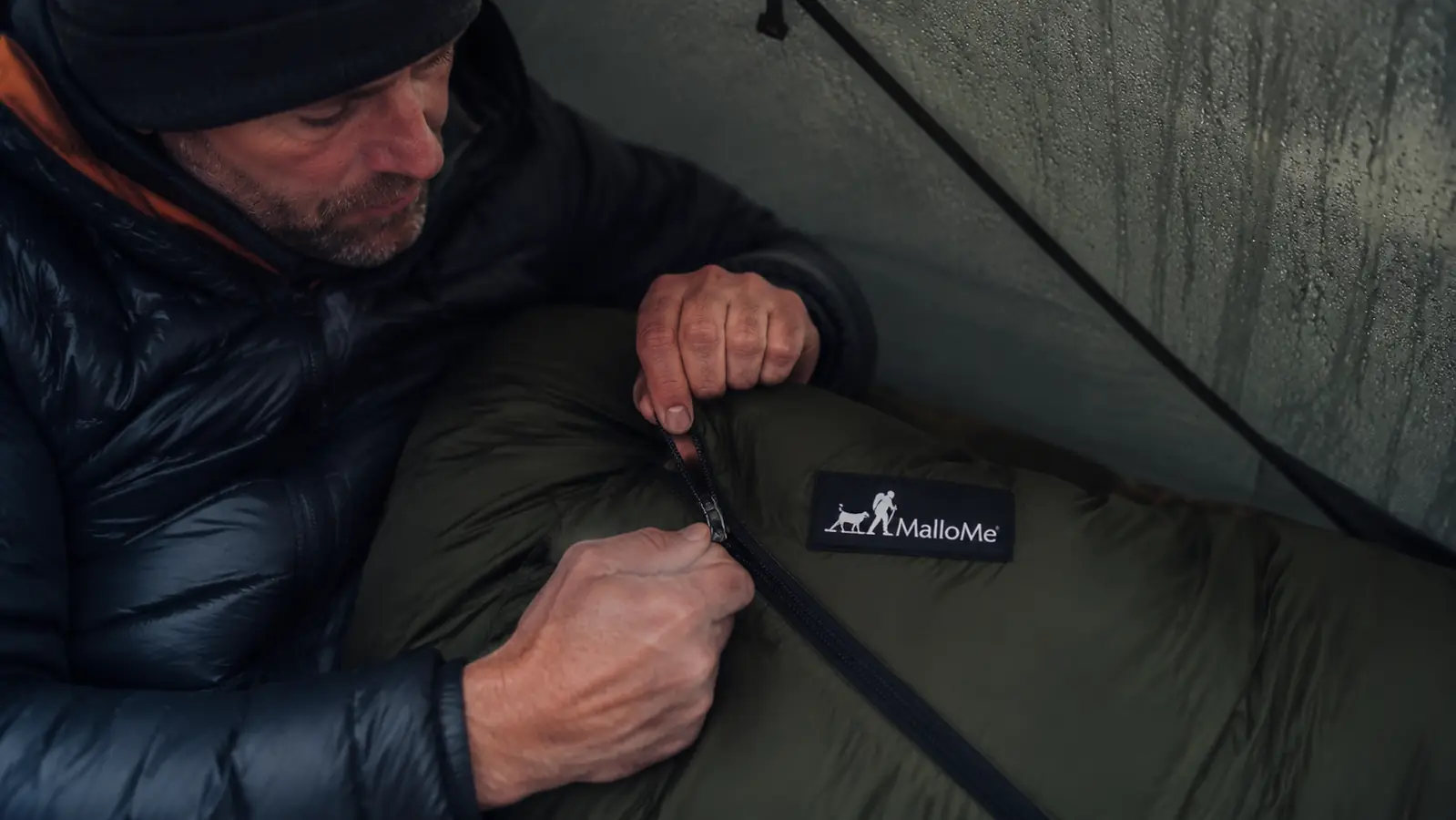
The MalloMe zipper is a YKK-style coil zip that runs the full length of the left side, with an interior baffle behind it to block cold spots. In temperatures above freezing, it works fine and zips smooth. Below 30 degrees, the zipper stiffens noticeably. Not broken, not jammed, but stiff enough that you need two hands to operate it cleanly, which is a problem when you have been sleeping in gloves and your bag is already cinched tight.
The other zipper issue is the draft collar at the top. The MalloMe has a hood with a drawcord, which is the right design for a mummy bag. But the collar at the shoulder level does not have a secondary cinch point. On warmer bags in this class, that is a non-issue. On a cold night, the gap where the zipper top meets the collar is where you will feel the first cold air. A fleece neck gaiter worn to bed solves this completely, but it is worth knowing going in.
Packdown Size: What the Photos Do Not Show
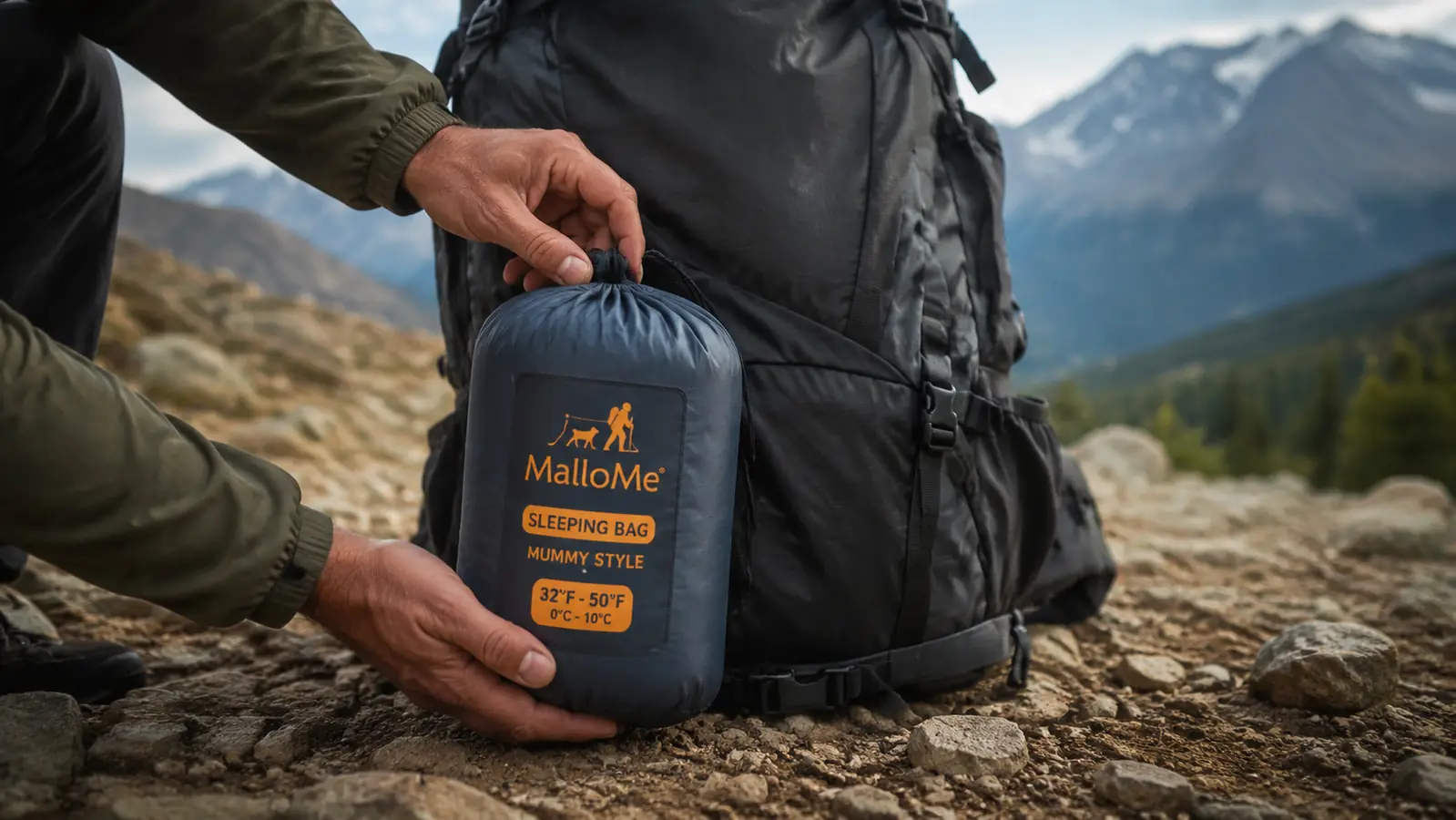
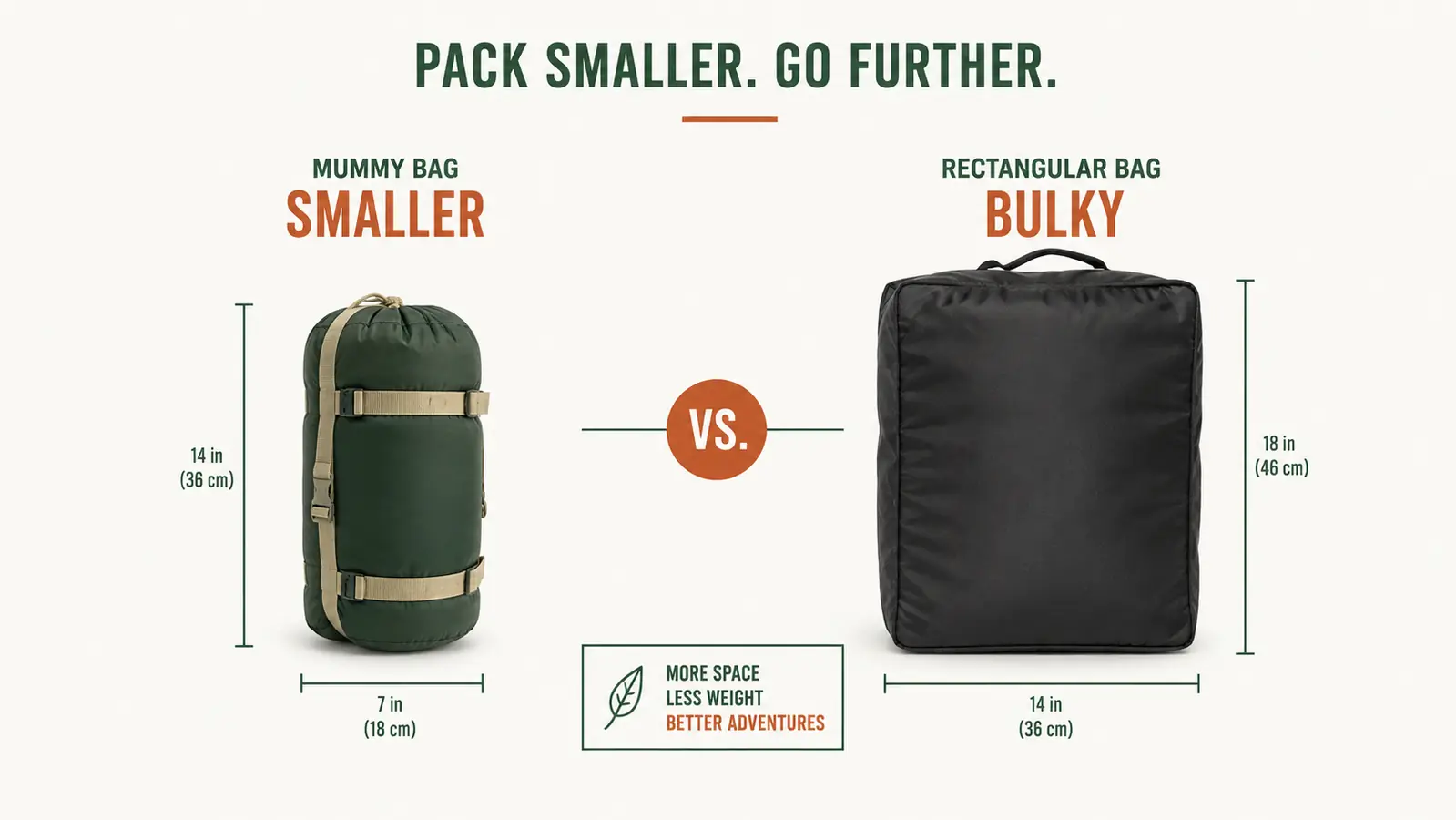
The MalloMe stuff sack compresses the bag down to roughly 12 by 7 inches, which is a solid packdown for a synthetic fill bag at this price. For backpackers used to down bags, it will feel big. For hunters who are car-camping or packing into a base camp on an ATV, it is completely manageable. It fits in the main compartment of a 55L pack without dominating the space, which is what matters for multi-day trips.
What the listing photos do not show clearly is the stuff sack compression quality. The compression straps are adequate but not bomber. After about a dozen pack-and-unpack cycles, I noticed the draw cord on my stuff sack loosening slightly at the anchor point. The bag still compresses fine, but I switched to my own dry bag for storage after the first season. That is a minor complaint on a bag at this price, but hunters who care about keeping a sleeping bag bone-dry in wet weather should plan to run their own dry sack anyway.
Moisture and the Synthetic Fill Question
The MalloMe uses a hollow-fiber synthetic fill rather than down. This gets dismissed in some gear circles as the cheap option, but for hunters and anyone camping in wet conditions, synthetic is actually the smarter call. Down collapses completely when wet and takes a long time to dry. Hollow-fiber synthetic retains about 70 to 80 percent of its insulating value when damp and dries noticeably faster. If you are hunting out of a tent in October rain or hiking through morning mist in the Pacific Northwest, this matters.
The caveat is that synthetic fills compress and pack out over time in a way that quality down does not. After two full seasons of hard use, some campers report the fill starting to lose loft in the footbox area. I did not experience dramatic lofting issues in my testing window, but it is a realistic long-term concern for a synthetic bag at this price point. If you are buying the MalloMe for five-plus years of heavy use, manage that expectation. If you are buying it for one or two seasons of weekend camping and hunting trips, it holds up well.
Down sounds premium until it is raining at your hunting camp. Synthetic fill that stays warm wet is often the smarter choice for real-weather field use.
Shell Fabric and Snag Resistance in the Field
The outer shell is a 210T polyester, which is the standard spec for bags in this price bracket. It is smooth to the touch and slides nicely against sleeping pad surfaces, which matters because a bag that grabs and bunches on your pad is miserable to sleep in. In field use, the shell has held up fine against normal tent-floor abrasion and the occasional scrape against tent stakes and gear.
Where you need to be careful is sharp debris. I had a camp in early October where the ground had small pine cones and bark chips under the tent floor. The tent groundsheet protected the bag from contact, but when I dragged the bag across a gravel parking lot while breaking camp in the dark, I put a small scuff on the shell. No puncture, no fill loss, but the shell fabric is thin enough that you should not abuse it outside a tent footprint. This is standard for the price bracket, not a MalloMe-specific weakness.
How It Stacks Up Against the Teton Sports Celsius
The full MalloMe vs Teton Sports Celsius comparison breaks down the spec-by-spec matchup in detail. The short version: the Teton runs warmer by about five degrees in real-world testing and has a slightly heavier, more durable shell. The MalloMe packs down smaller and costs less. For backpackers counting pack weight, MalloMe wins. For hunters who are weight-neutral but want slightly more margin on cold nights, Teton Celsius is worth the extra spend. Neither bag is a clear winner for all use cases, which is why that comparison article exists.
The Hood Design and Why It Matters More Than You Think
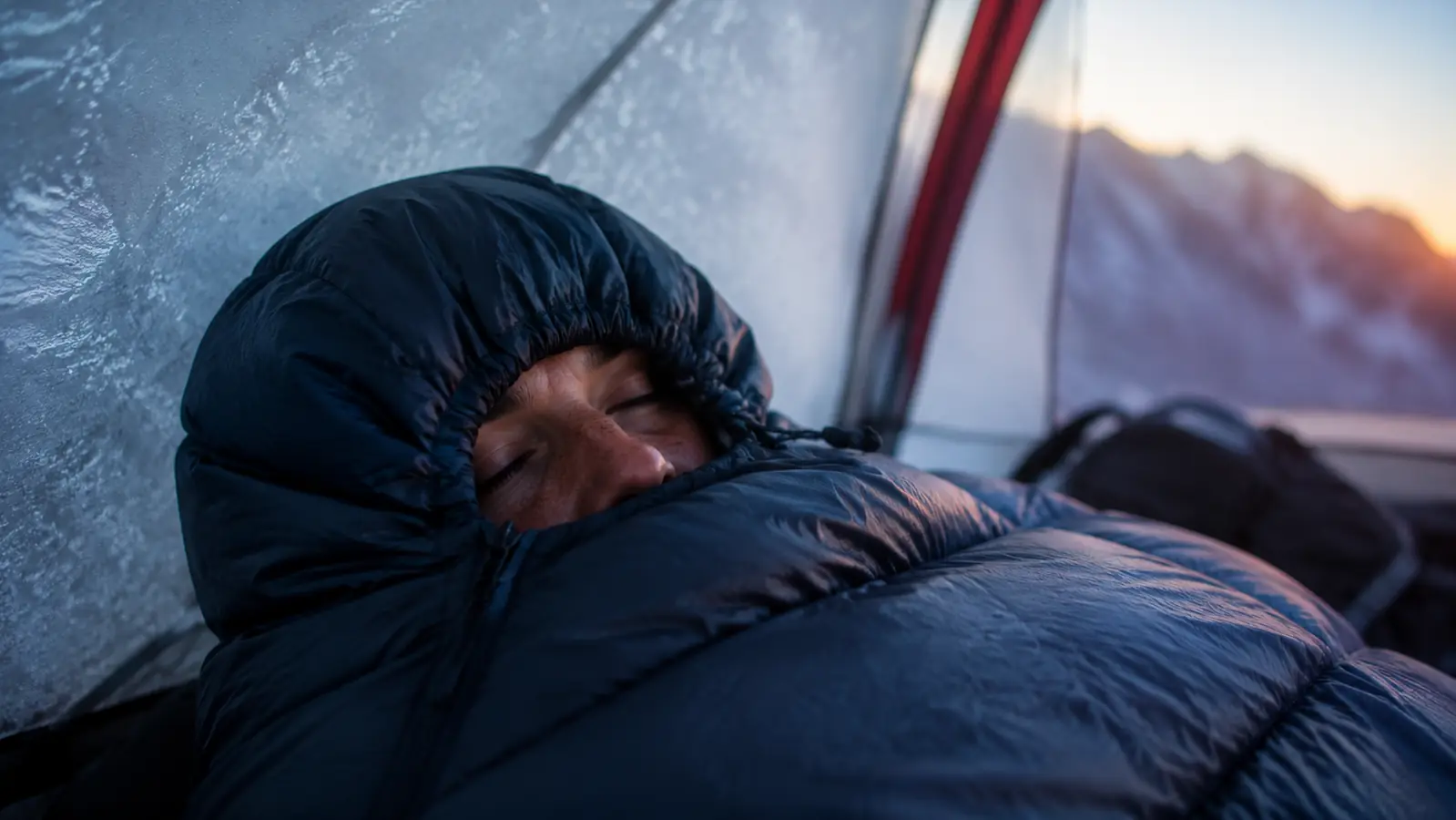
Mummy bags live or die by their hood design. If the hood does not seal around your face in cold temps, you lose twenty to thirty percent of the bag's effective warmth through convection off your head. The MalloMe hood has a single drawcord that cinches from behind the head rather than from the front. This is a less common design, and it takes one night to dial in the adjustment. Once you have it set, it holds position well through the night and does not loosen or slip the way front-cinch hoods sometimes do.
The tradeoff is that readjusting the hood in the middle of the night while half-asleep is slightly more awkward than a front-pull design. On cold nights when I needed to tighten the hood at 3am, I had to sit up briefly to find the cord. Minor, but worth knowing. This is not unique to MalloMe, but it is the kind of field-reality detail that does not make it into most online reviews.
What I Liked
- Synthetic fill stays insulating when damp, unlike down bags at this price
- Hood cinch holds position through the night once dialed in
- Packdown size fits a 55L pack without dominating the space
- 16,577 reviews at 4.5 stars is genuine signal, not astroturf
- The price leaves room in your budget for a liner or base layers for cold-weather margin
Where It Falls Short
- 32-degree rating is a Limit rating, not a Comfort rating. Expect cold feet below 40 degrees without base layers
- Zipper stiffens in sub-30 temps and requires two-handed operation
- Stuff sack draw cord loosens over time. Switch to a dry bag for long-term use
- No secondary cinch at the shoulder collar, creates a small cold spot on very cold nights
- Synthetic fill will compress and lose loft faster than down after extended seasons of heavy use
Who This Is For
The MalloMe is the right bag if you are camping mostly in three-season conditions, meaning spring through fall with typical overnight lows between 40 and 60 degrees. It is also a solid pick for hunters who car-camp or drive to a base camp and want a capable bag that does not eat into the gear budget. Backpackers who camp at moderate elevations and do not regularly push into shoulder-season cold snaps will get good service from it. Anyone who has bought a budget rectangular bag and woken up cold will immediately notice the difference that a properly fitted mummy bag makes.
It is also a legitimate choice as a backup bag, a guest bag at a cabin, or a bag for a teenager doing their first overnight trips. The price makes it easy to buy two if you need them. For advice on building a full cold-weather sleeping system around a bag like this, the cold-weather camping guide walks through layers, ground insulation, and tent setup that add meaningful warmth without requiring a bag upgrade.
Who Should Skip It
If you are regularly hunting or camping in overnight temps below 30 degrees, this bag is not your primary bag. It will keep you from being in real trouble, but it will not let you sleep well, and a well-rested hunter or hiker is a safer and more effective one. Step up to a bag with a genuine 15-degree or 20-degree comfort rating if cold-weather overnight use is your primary scenario. Backpackers who care deeply about minimizing pack weight and bulk should also look at down options in the mid-range, which will compress to roughly half the volume of the MalloMe for comparable warmth.
Also skip this bag if you run hot and like having a bag you can vent aggressively. The MalloMe is cut narrow enough that tall campers or wide-shouldered guys may find it confining. Check the shoulder width dimension in the product listing before ordering if you are a larger build.
At its price point, the MalloMe gives you a real mummy bag with a real hood and a real temperature rating. Know the limits going in and it will not let you down.
Over 16,000 buyers and a 4.5-star average is a track record worth trusting for three-season camping. Check current pricing and color options on Amazon before your next trip.
Amazon Check Today's Price on Amazon →