
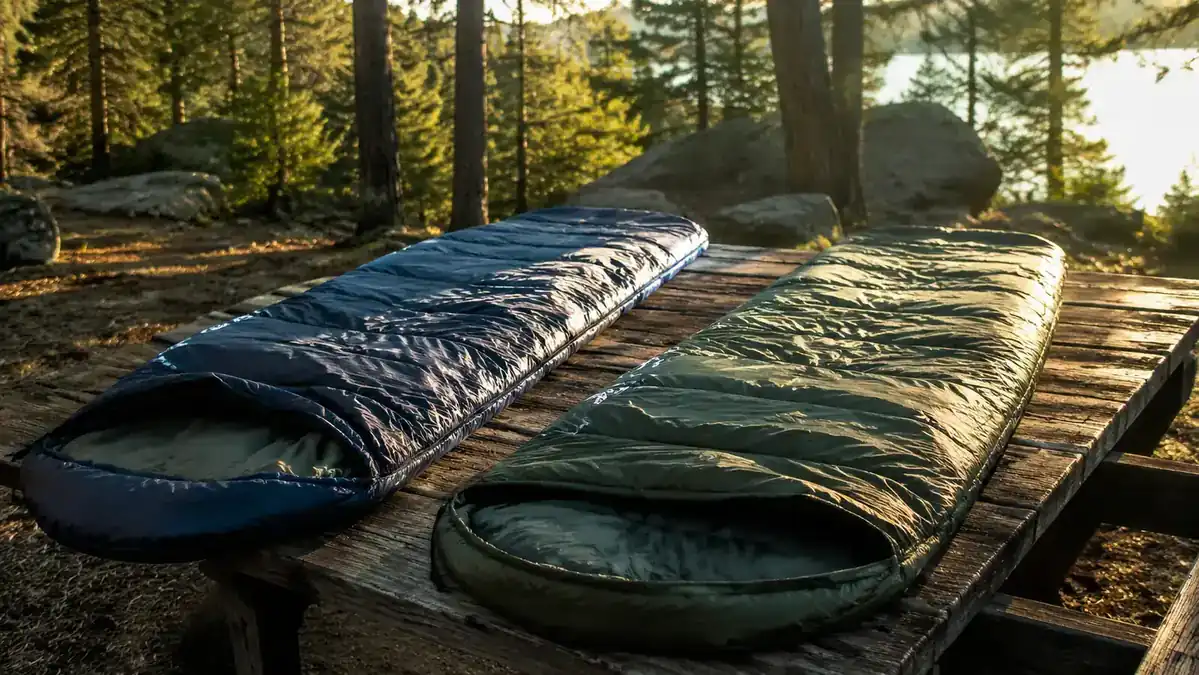
I have been cold in the wrong bag. One October night in the Smokies, I found out exactly what a sleeping bag rated to 45 degrees feels like at 31. It is not a subtle difference. Your hips ache, your feet never warm up, and you spend the last three hours before sunrise counting down the minutes to daylight. Since then I have tested bags carefully before trusting them on a real trip, and I have had both the MalloMe and the TETON Sports Celsius in rotation long enough to give you a straight answer on both. These are the two names that keep coming up when someone asks me what to buy on a budget, so here is the actual comparison, based on field use rather than spec sheets.
Short version: both bags are inexpensive, both are mummy-cut, and both will handle three-season car camping for most adults. But they are not the same bag, and if you are camping in anything colder than 50 degrees at night, the differences are real and worth knowing before you spend money on either. The MalloMe is the one I reach for first, and I will walk you through exactly why that is.
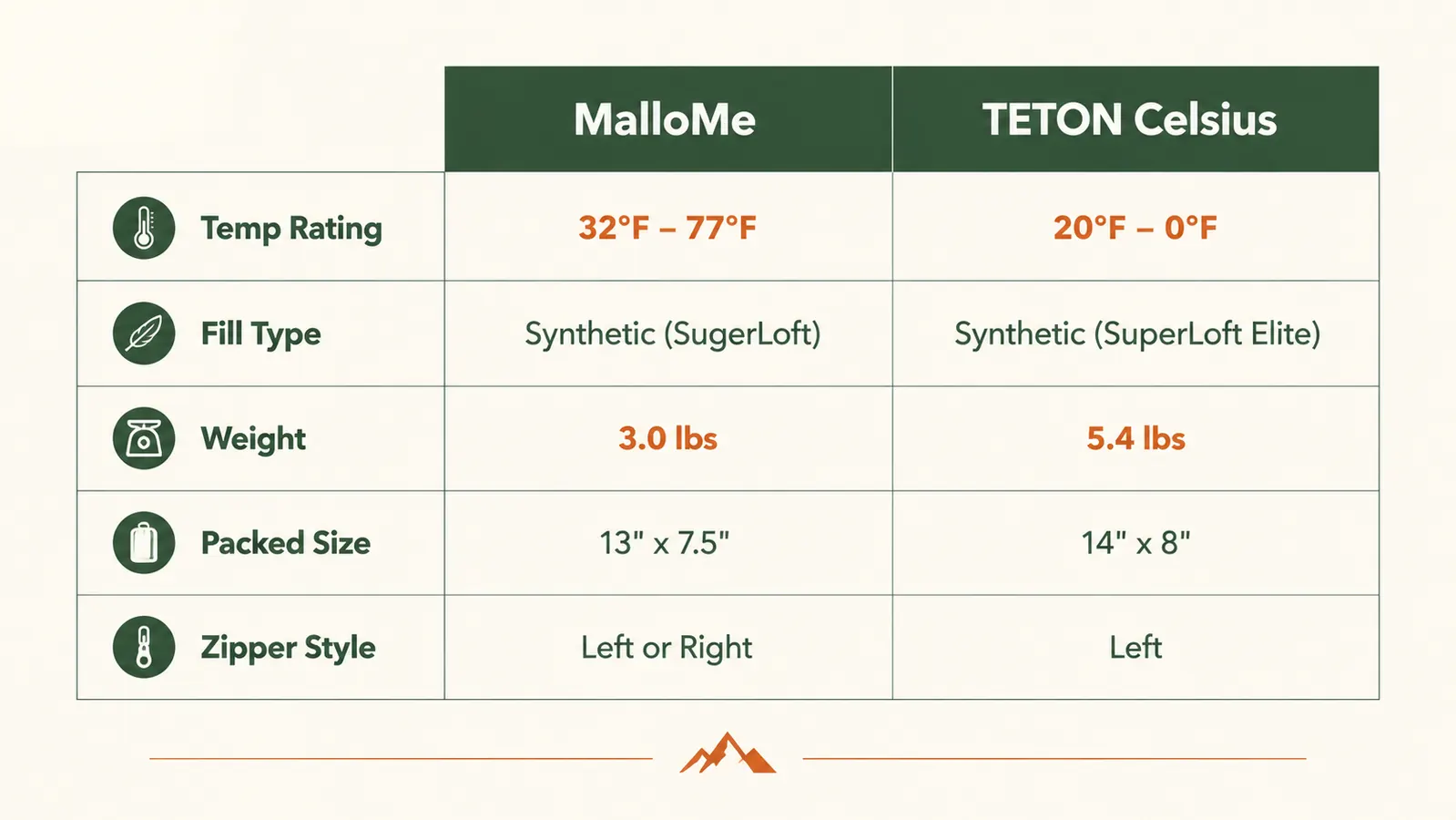
| MalloMe Sleeping Bag | TETON Sports Celsius | |
|---|---|---|
| Temperature Rating | 32 degrees F (0 degrees C) | 20 degrees F on XL version; entry models also rate to 32 degrees F |
| Fill Type | Hollow-fiber polyester fill | SilkWeight microfiber fill |
| Packed Size | 14 x 7 inches compressed | 17 x 9 inches compressed (regular) |
| Weight | 3.4 lbs | 4.2 lbs (regular) |
| Shell Material | 210T ripstop polyester taffeta | 75D polyester outer with nylon liner |
| Zipper Design | Full-length dual pull, snag-resistant on liner seam | Full-length single pull, known to catch near foot box seam |
| Mummy Hood | Fitted drawstring hood with face gasket draft collar | Fitted hood, slightly bulkier at crown |
| Amazon Reviews | 16,500+ at 4.5 stars | 8,000-12,000 at 4.4 stars depending on SKU |
| Price Range | Affordable | Mid-range, varies by size and temperature rating |
If you camp anywhere with night temps below 45 degrees, this is the bag to start with.
The MalloMe is rated to 32 degrees F, packs down to 14 by 7 inches, and has over 16,000 verified reviews behind it. At this price it is the easiest call in budget sleep systems.
Amazon Check Today's Price on Amazon →Where the MalloMe Wins
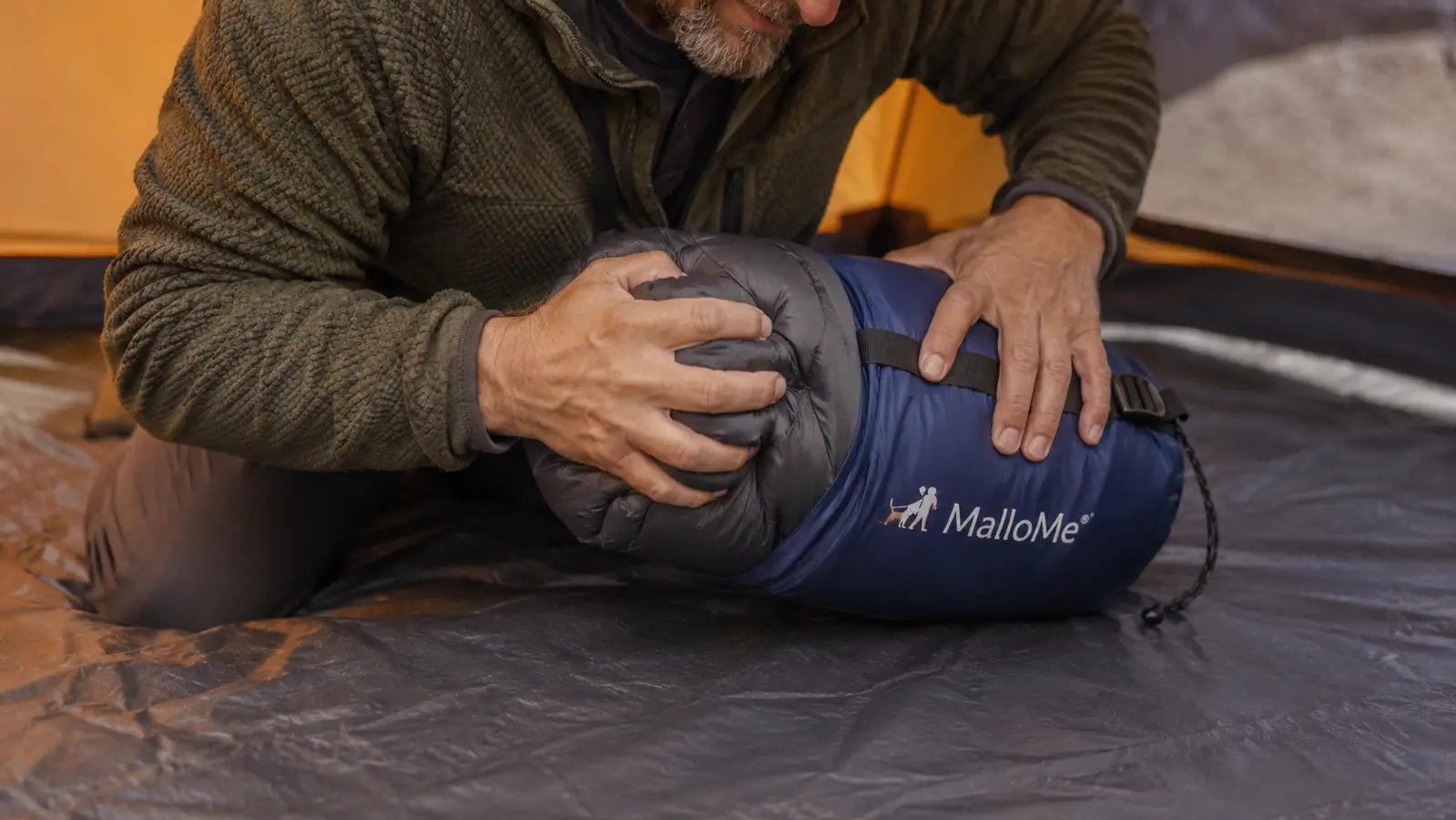
Pack size is the first real difference I noticed. The MalloMe compresses down to roughly 14 by 7 inches. That fits cleanly in a side pocket on most 55-liter packs or lashes to the underside of a daypack without eating into your food and layer storage. The TETON Celsius regular packs to something closer to 17 by 9 inches. That is not massive, but when you are already running a tight kit on a hunting trip or a two-night backpack, the extra volume adds up fast. On my last scouting trip into the Rattlesnake Wilderness I ran the MalloMe inside my pack rather than strapped outside, and that made a real difference in how the load balanced on steep switchbacks over eight miles of trail.
Weight matters on any trail trip, and the MalloMe comes in nearly a pound lighter than the Celsius regular. That gap is not theoretical. A pound is a liter of water, or a full day of trail food, or the margin between a pack that feels manageable at mile eight and one that does not. I have carried both bags on overnight hikes, and the MalloMe wins on weight without it being close.
The zipper on the MalloMe runs smooth and stays smooth. I have used it in wet conditions, sandy conditions, and below-freezing cold where metal zippers love to stick. It has not once caught on the liner in two years of use. The TETON Celsius has a documented tendency to snag near the foot box where the inner liner meets the zipper track. I have had it happen to me in camp, and I have heard the same complaint from a buddy who runs the Celsius on his deer camps in Pennsylvania. It is not a dealbreaker, but at 5am when you need to get out of the bag fast, a snagged zipper is a real problem.
Where the TETON Celsius Wins
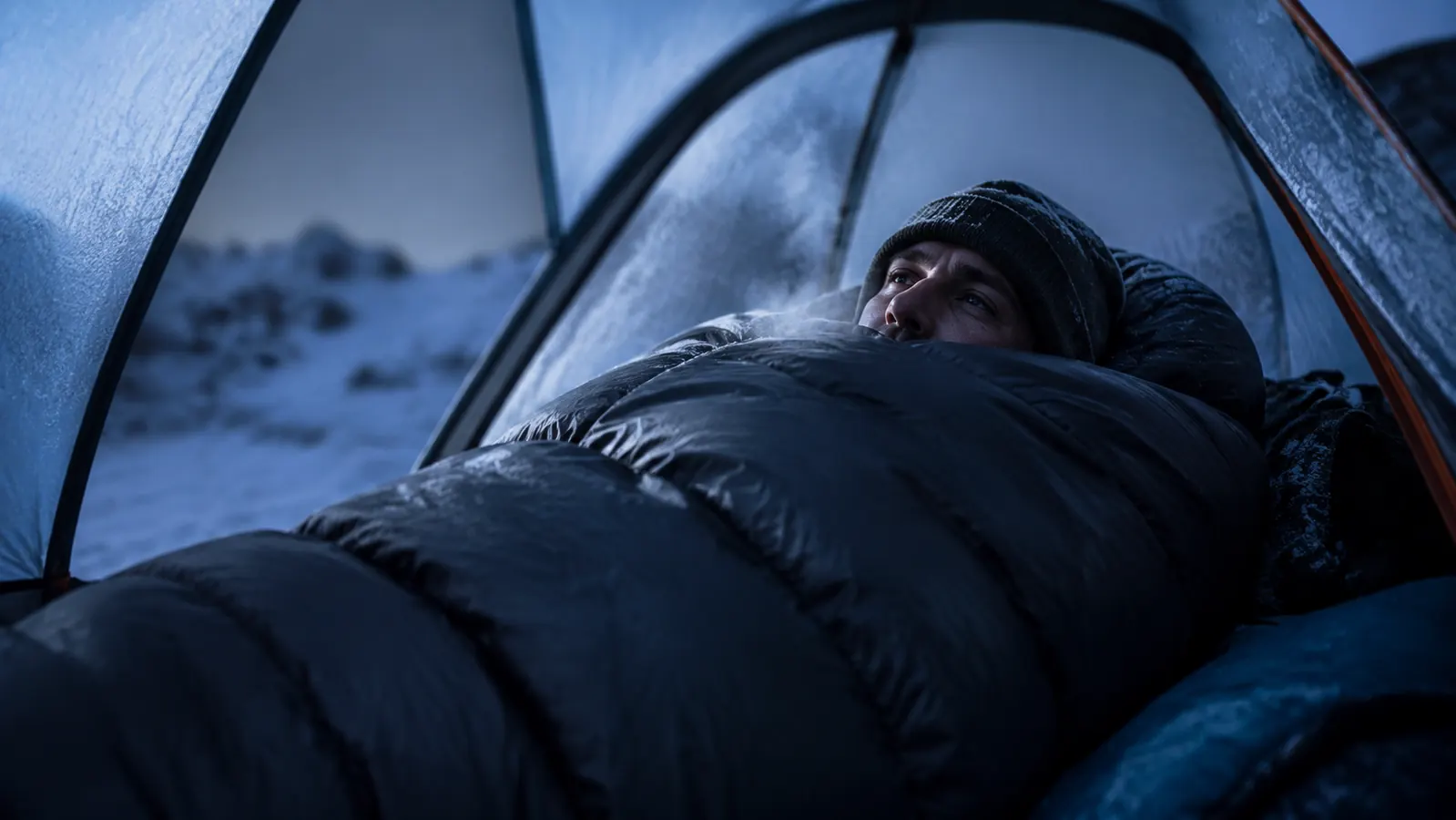
If you need a lower temperature rating, the TETON Celsius XL has a genuine advantage. It rates to 20 degrees F, and in my experience that rating is reasonably honest when paired with a quality pad. If you are camping in early November in the mountains, running a deer camp with an unheated tent, or waking up at pre-dawn dark in October with frost on the ground, a 20-degree bag is a meaningfully different piece of kit than a 32-degree bag. The MalloMe is honest about its 32-degree floor and I have pushed it to about 28 degrees overnight with a base layer and a good pad, but if you regularly see the low 20s, buy the right bag. The Celsius XL earns its price in that specific use case.
The Celsius also has a slightly roomier cut through the shoulders and chest, which matters for bigger guys or anyone who does not want to feel cinched in all night. If you are 6 feet tall and over 200 lbs, the MalloMe regular can feel restrictive. The Celsius gives you more room to shift your hips and turn on your side. That extra space costs you in weight and pack size, but for car camping where both bags ride in the back of the truck anyway, the comfort trade-off can favor the Celsius for larger folks.
The MalloMe is honest about its temperature rating, packs down tight, and zips smooth every time. For three-season camping, that combination is hard to beat at this price point.
Warmth in Real Conditions
Both bags share a 32-degree F rating at their entry SKUs. In practice, the MalloMe performs as advertised when you pair it with a sleeping pad rated R-3.0 or higher. Ground cold is the biggest heat thief in any sleeping system, and no bag rating accounts for a bad pad. I have used the MalloMe down to 29 degrees overnight wearing a merino base layer, wool socks, and a lightweight beanie on a Therm-a-Rest Z Lite Sol. I slept well. Anything below 28 regularly, I would want a warmer bag and different pad.
The fill on the MalloMe holds its loft well after repeated washing, which surprised me at this price. Most hollow-fiber synthetic fills in this range start developing cold spots where the batting bunches or compresses unevenly after a season of hard use. I machine wash the MalloMe in cold water and dry it low with a couple of tennis balls. Two years in, the fill is still uniform from shoulder to foot box. The TETON Celsius is not as consistent after the same care routine. The SilkWeight fill shifts slightly near the foot box over time, which is exactly where you need insulation the most when temperatures drop into the 30s.
For a deeper look at how the MalloMe performs across multiple seasons including a wet October weekend in the mountains, check out the MalloMe long-term review where I cover two full years of three-season use and what the bag looks like after dozens of nights in real conditions.
Shell Durability Over Time
The MalloMe's 210T ripstop shell is on the lighter side for a budget bag. I noticed that the first time I handled it. But it has not ripped, snagged, or developed pinholes in two years of use across rocky campsites, sandy beach camps, and pine needle tent floors. The seams are tight, the zipper baffles hold their position against the fill, and the fabric resists pilling better than cheaper taffeta alternatives I have used. At this price, the shell quality is better than expected.
The TETON Celsius outer fabric at 75 denier feels more substantial at first handle and is somewhat more abrasion-resistant at the high-contact points, which has value if you are sleeping in a bivy or on bare ground without a tent floor. In actual campground and trail use, though, that extra durability almost never shows up in a way that changes the real-world outcome. What matters more over a full season is zipper reliability and fill uniformity after washing, and the MalloMe holds the edge on both.
Who Should Buy Which
Buy the MalloMe if you camp from spring through fall, do any backpacking or hiking trips where pack weight and volume matter, or want a bag that holds together and launders well across multiple seasons. It is the right call for the vast majority of three-season campers. If you are pushing into colder weather with a hunting camp or late-season overnight, the honest MalloMe review covers exactly what layering system makes it viable into the low 30s and where it runs out of range.
Buy the TETON Celsius XL if you are a bigger person who needs shoulder room and hates feeling confined in a narrow mummy cut, or if you camp regularly in temperatures that dip into the low 20s and need that colder rating to actually sleep through the night. Skip the entry-level Celsius. It offers no meaningful warmth advantage over the MalloMe while costing more and packing noticeably bigger. The XL is the only version where the Celsius makes a clear case for itself over the MalloMe.
And if you want to understand why mummy-cut bags outperform rectangular bags at every temperature that matters, the 10 reasons mummy bags beat rectangular bags piece breaks down exactly why the cut matters as much as the fill rating when the mercury drops. In short: a rectangular bag lets warm air pool away from your body, and at 35 degrees that gap will wake you up cold at 2am whether or not the fill is adequate. The mummy cut closes that gap, which is why both the MalloMe and the Celsius use it. Within the mummy category, the MalloMe wins on every practical metric outside of roominess and sub-25-degree ratings.
For most three-season campers, the MalloMe is the smarter buy at any price point in the budget range.
It packs down smaller, weighs less, zips reliably, and holds its loft across years of hard camping use. More than 16,500 verified reviews at 4.5 stars back that up. This bag has earned its reputation on real trips, not on marketing copy.
Amazon Check Today's Price on Amazon →