
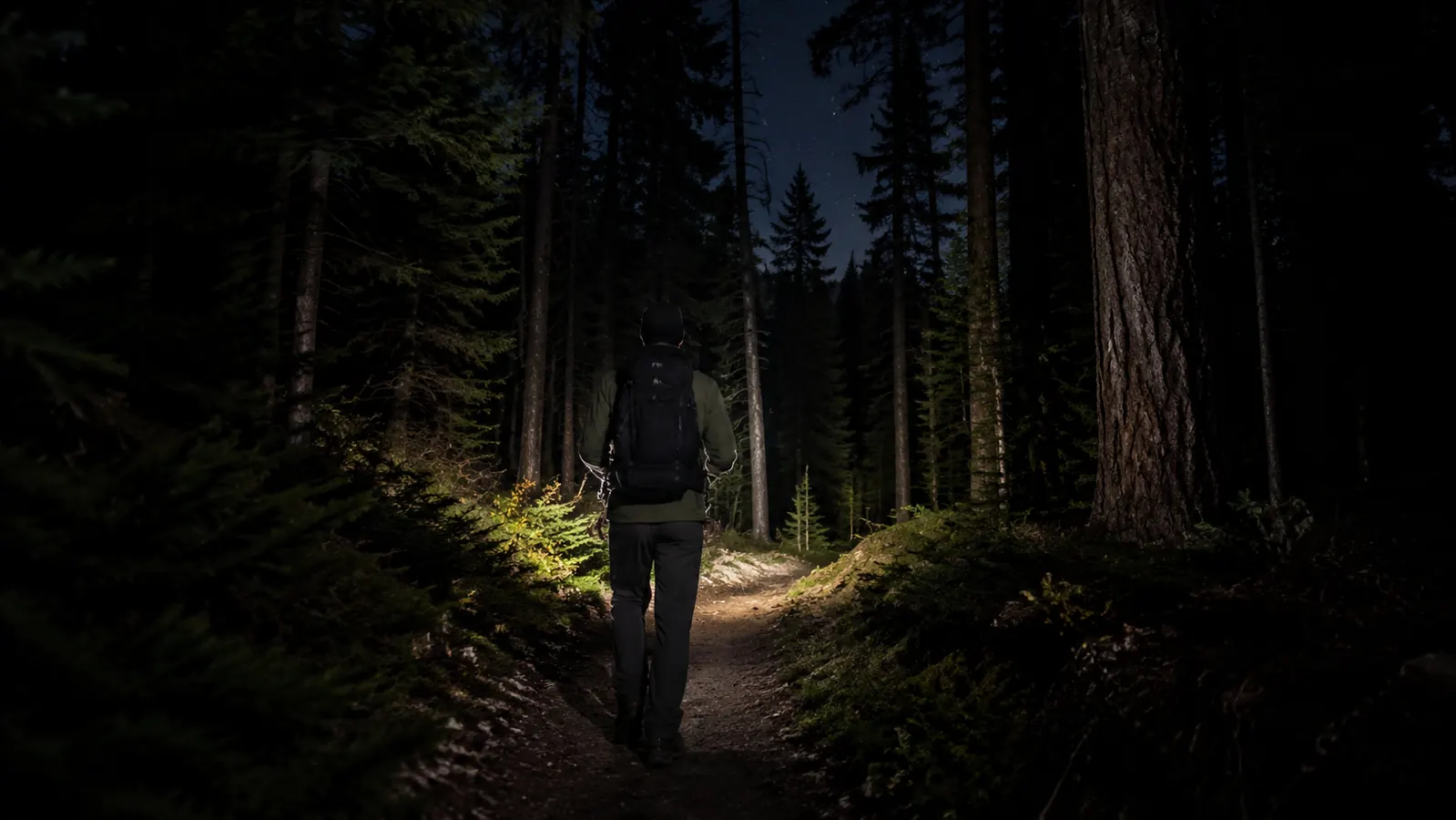
I have been camping, hunting, and fishing long enough to know that darkness is the part of an outdoor trip most people underplan. You show up with a lantern for the picnic table, maybe a flashlight tucked in a bag somewhere, and then the fire dies down at 10pm and you realize you cannot find your boot, the camp stove's valve, or the trail back to your tent. The fix is not complicated. One good headlamp on your head takes care of almost every night situation you will face in the field, from camp chores to a full-dark trail return to a 4am hunting setup. The key is using it right.
I have been using the Blukar rechargeable headlamp for the past several seasons. It runs 2000 lumens at full blast, has a motion-sensor mode that is more useful than it sounds, and charges via USB-C so it is not burning through AA batteries every trip. What follows is the exact system I use to run camp lighting and night hikes with nothing but a headlamp in my kit. If you want the full gear breakdown before reading, the Blukar honest review covers everything I like and everything I would change.
Your camp is dark and one headlamp fixes almost all of it.
The Blukar rechargeable headlamp puts out 2000 lumens, has a motion sensor for hands-free use at camp, and charges via USB-C. Over 20,000 buyers and rated 4.5 stars. Check the current price on Amazon.
Amazon Check Today's Price on Amazon →Step 1: Charge the Night Before, Not the Morning Of
This sounds obvious and people still mess it up. I was guilty of it myself a few years back on an elk scouting trip, showing up at the truck with a headlamp at 40% because I waited until camp morning to think about it. The Blukar has a USB-C charging port and the battery lasts long enough that a full charge the night before departure is all you need for a two or three night trip on low and medium modes. Full blast at 2000 lumens will drain it faster, but I almost never need full blast for an entire night.
My habit now: the headlamp charges on the nightstand at home while I pack everything else. It goes into the top lid pocket of my pack, not buried in the main compartment where it might get used to dig around for something else and accidentally left on. Check the indicator light before you leave the trailhead. If you see anything less than a full charge after an overnight drive to camp, top it off in the truck with a USB-C cable before you hike in. Two minutes now beats stumbling around in the dark later.
Step 2: Set Up Camp Lighting Before It Gets Dark
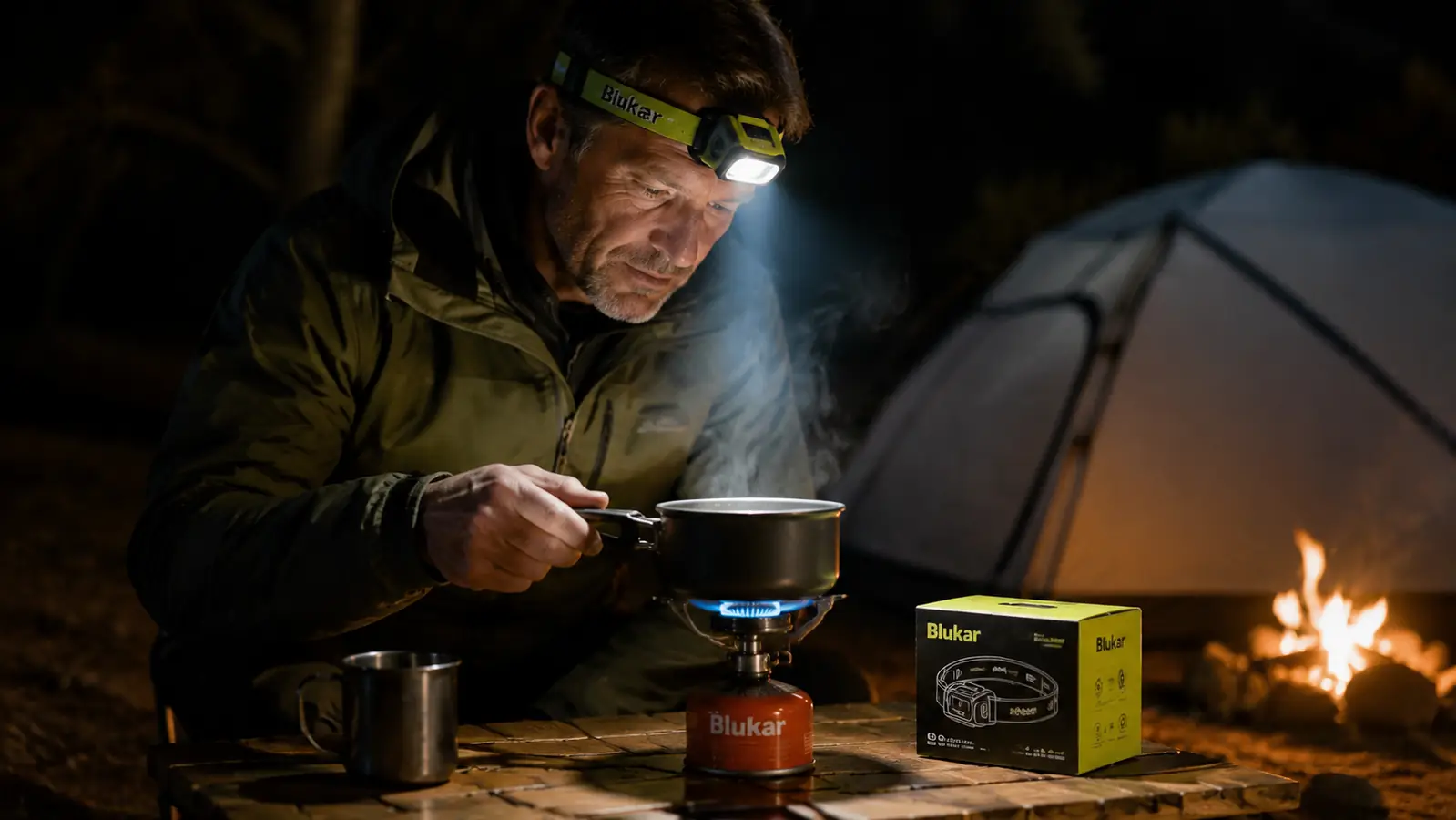
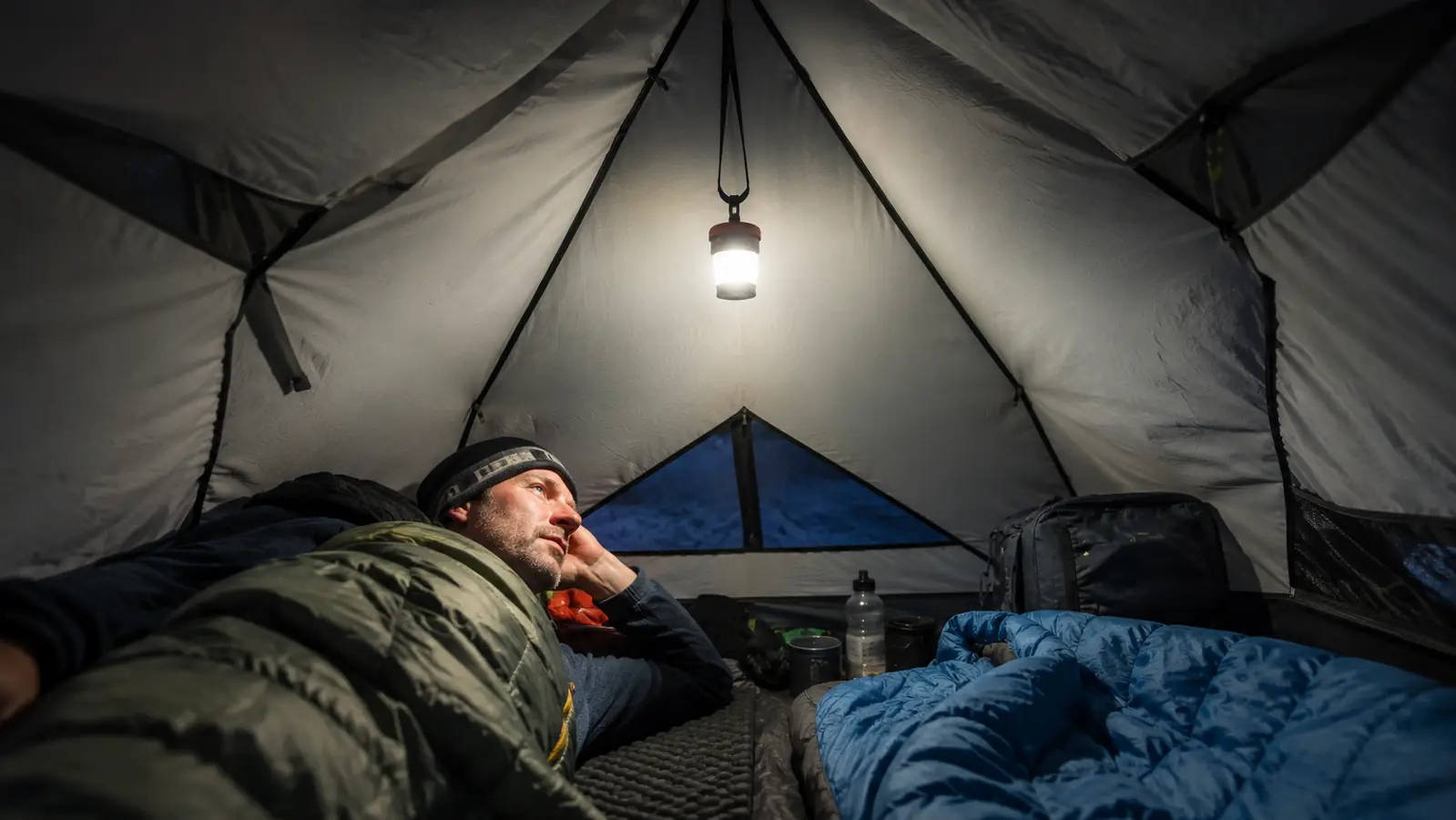
The single best lighting habit I have developed is setting up my camp lighting situation while I still have daylight. That means identifying where I want a fixed light source, which is usually at or near the cook area, and deciding in advance how I am going to run the headlamp versus sitting around the fire versus just the ambient glow of the lantern. On most trips I do not carry a separate lantern at all. A headlamp hanging from a branch stub or a tent loop provides enough diffuse light for cooking and camp tasks without me having to wear it on my head the whole time.
The trick with the Blukar is the motion sensor mode. When you set the headlamp to motion-sensor mode, a wave of your hand in front of the sensor toggles the light on and off without you touching a button. Sounds gimmicky. I thought so too. But when your hands are greasy from gutting a fish or you have got a hot pot on the stove and you need to see something across the camp table, not fumbling with a button is genuinely useful. Set it up on a branch or a hang point at chest to head height and use it like an automatic overhead light for the cook area.
If you are car camping, a thin bungee looped through the headlamp's strap and clipped to the trunk hatch or an awning rod gives you a flood-lit workspace that does not require you to stand under it to trigger. That setup has saved me from burning dinner more than once.
Step 3: Choose the Right Beam Mode for the Task
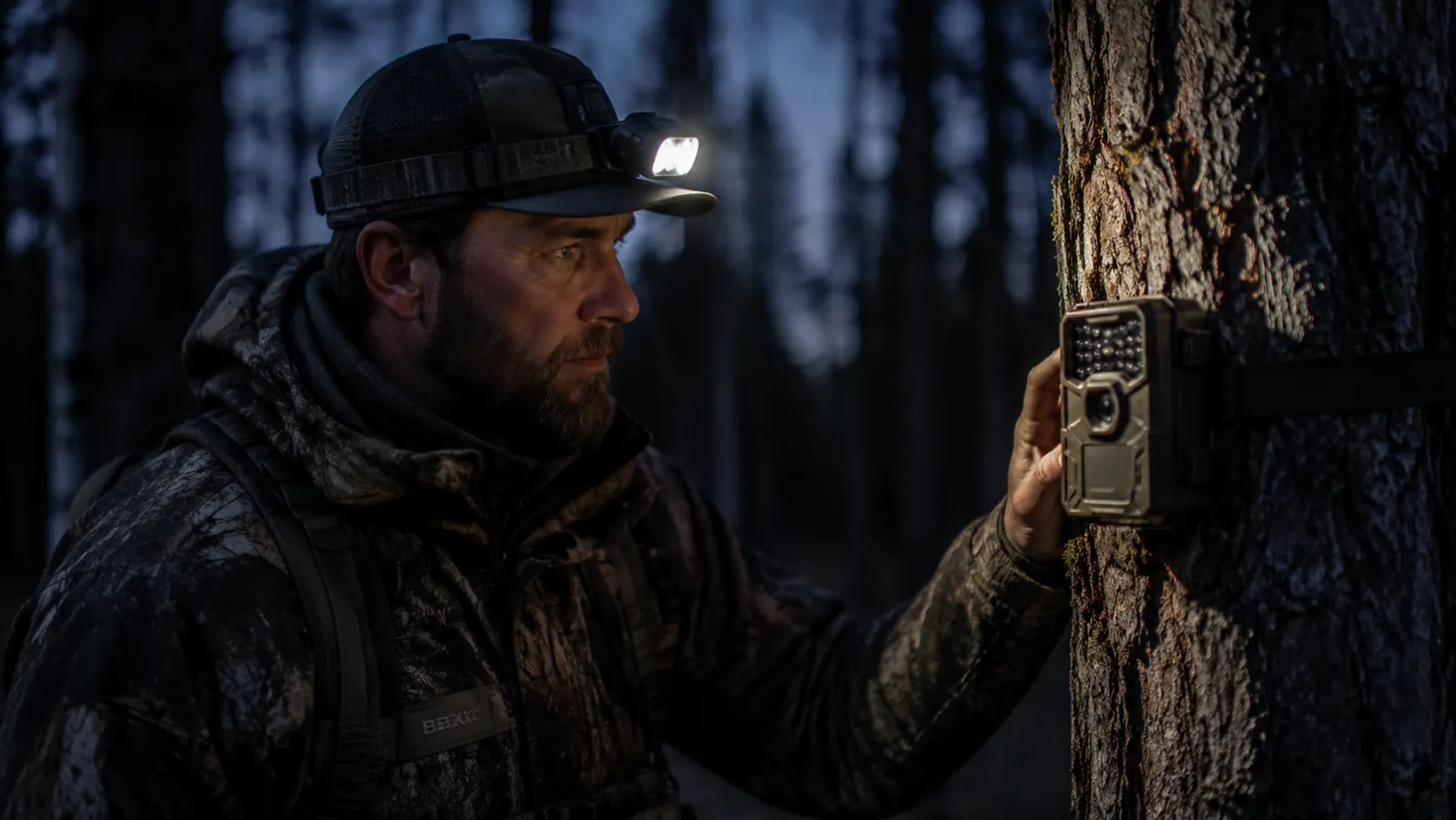
Most headlamps have more modes than people use. The Blukar has a high-lumen flood mode, a focused spotlight mode, a red light mode, and a dimmed version of each. Using the wrong mode for the wrong task kills your battery faster than necessary and, at the wrong moment, can kill your night vision. I learned this the hard way on a deer stand when I fired up full white flood to check a text and lost my dark-adapted vision for ten minutes right at first light.
Here is how I match modes to tasks. Full flood at high lumens is for navigating technical trail in full dark, scanning camp for a lost piece of gear, or working on something mechanical in poor conditions. Medium flood is for camp chores, cooking, and reading the map. Red mode is for anything where you need to preserve night vision, which means pre-dawn hunting setups, fishing in darkness, or moving around camp when other people are sleeping. Red light does not spook game and it does not wake up your tentmate. If you have not used your headlamp's red mode yet, start using it. It changes a lot.
Step 4: Navigate a Night Hike Without Getting Into Trouble
Night hiking with a headlamp is a different skill than daytime hiking. The beam narrows your field of view and flattens depth perception, which means obstacles that would be obvious in daylight, a root across the trail, a drop-off at the edge, a wet rock, are harder to read. The mistake most people make is cranking the headlamp to max brightness and walking fast. Bright light close to your eyes kills your peripheral vision. Slow down and let the beam work for you at a pace where you have time to process what you are seeing before you step on it.
On a well-marked trail, medium brightness is all you need and it preserves battery. On an unmaintained trail or any off-trail travel, bump it up and watch the edges of the beam, not just the center. The Blukar's spotlight mode throws a tighter beam farther down the trail, which helps you identify a blaze on a tree or a cairn stack from 30 feet out. I use spotlight to locate the next trail marker, then drop back to flood as I close the distance. That combination is faster and safer than full-blast flood the entire way.
One more thing: know how to get back before you go out. I run a headlamp check before every night hike the same way I check my laces. Battery good, modes cycling properly, strap snug so it does not slip on your forehead when you look down. A loose headlamp that bobs around is a liability on uneven ground.
Red mode does not spook game and does not wake up your tentmate. If you have not used your headlamp's red mode yet, start using it. It changes a lot about your nights in the field.
Step 5: Manage Battery Life Across a Multi-Day Trip
A rechargeable headlamp on a three-day backcountry trip needs a charging strategy unless you are willing to carry a spare battery bank. I carry a small 10,000 mAh USB-C power bank on any trip longer than two nights. It weighs about the same as a water bottle and it covers the headlamp plus my phone for the whole trip. The Blukar takes about two hours to charge from dead, so I plug it in while I cook dinner and it is topped off by the time I need it later that night.
On shorter overnight trips, the factory battery is plenty. I have never killed it on a single night's use when I am running mixed modes, which is how most people actually use a headlamp. Red for pre-dawn, medium flood for camp, spotlight for a trail check. That kind of real-world use pulls a fraction of what full-blast continuous would. The spec sheet says the battery lasts around 4 hours at full lumens. In practice with mixed use, I get a lot more than that out of a charge.
If you are running multiple nights without a power bank, be disciplined about not leaving it on when you do not need it. It sounds basic. In camp when there is activity and conversation, headlamps often get left on face-down on the table draining into nothing. Hang it on something when it is not on your head. The motion-sensor mode actually helps here too: the light goes off on its own when nothing is moving in front of it, which saves battery without you having to think about it.
What Else Helps
A headlamp handles most camp and trail lighting situations by itself, but a few habits make it work better. First, wear it on bare skin or a thin beanie rather than a thick hat brim, since a loose fit causes the beam to point at the ground instead of where you are looking. Second, keep a backup light source, even a cheap keychain light, in your hip belt pocket for genuine emergencies. I am not suggesting you need two headlamps. I am saying that a dead headlamp three miles from the trailhead in full dark is a real situation and a keychain light in your pocket costs nothing in weight. Third, if you wear glasses, test your beam angle before you need it at night because the lamp angle sometimes sends glare off the lenses in flood mode. Tilting it slightly downward usually fixes it.
For more on what the Blukar headlamp actually does and does not do well in the field across multiple seasons, check the full long-term headlamp review and the breakdown of why a rechargeable headlamp outperforms a lantern for most camping situations. The short version: once you stop relying on a lantern for everything and start trusting the headlamp, the whole camp setup gets simpler and lighter.
One headlamp does the job. Make sure it is a good one.
The Blukar 2000-lumen rechargeable headlamp is what I reach for on every trip. USB-C charging, motion sensor mode, red light for night vision, and a strap that actually stays put. Over 20,000 people own it for a reason. See today's price on Amazon.
Amazon Check Today's Price on Amazon →