

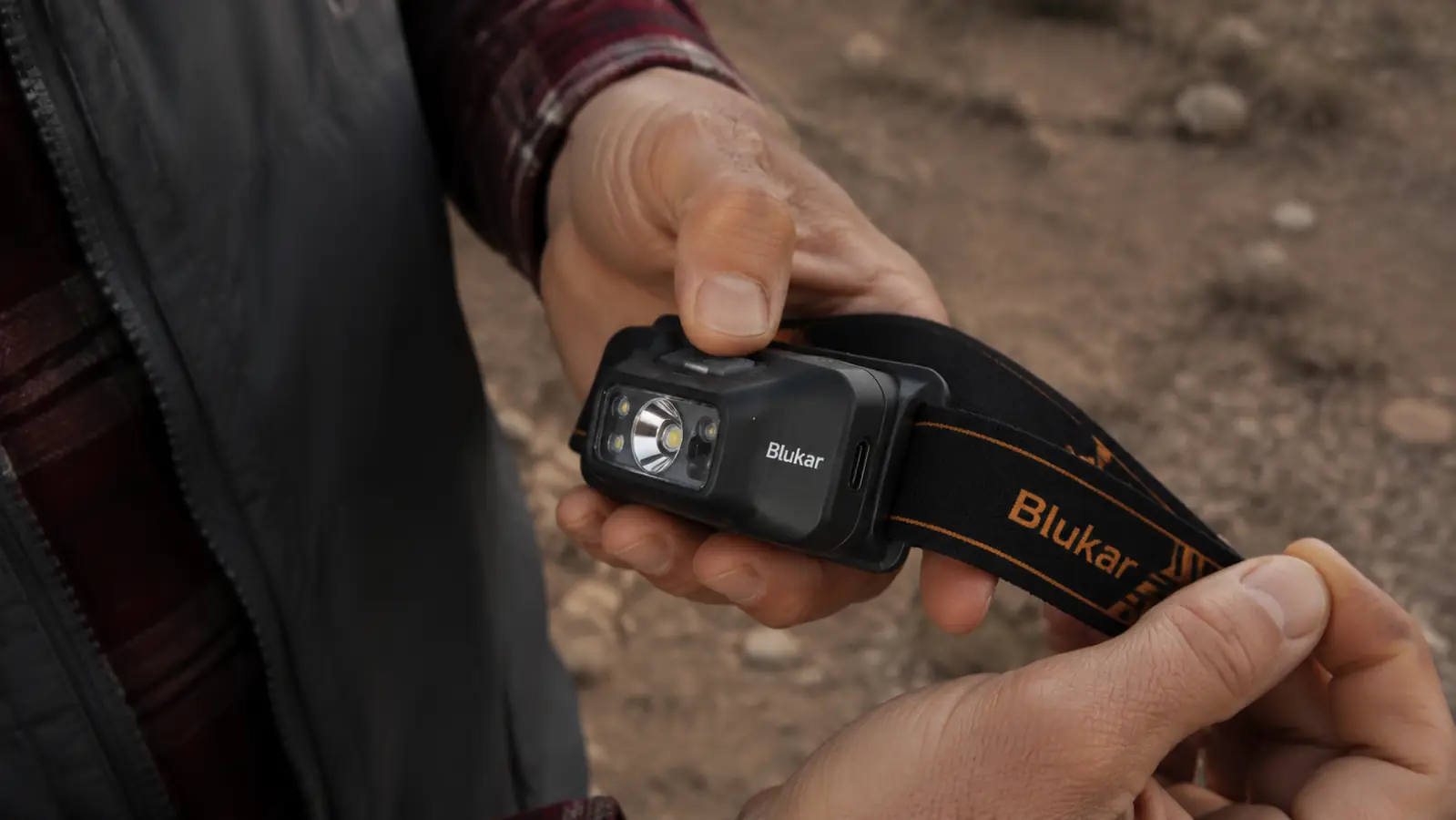
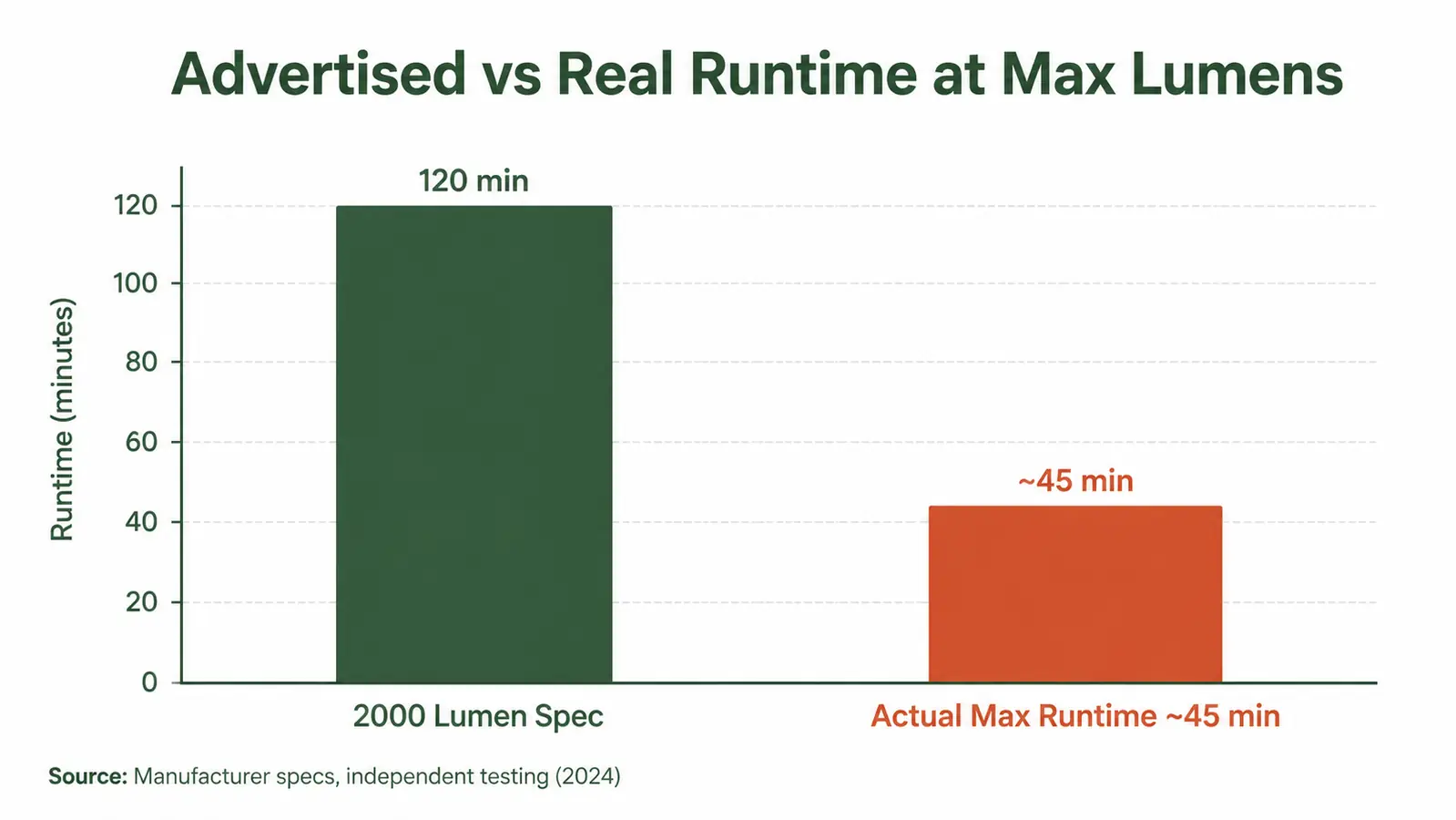
Let me tell you what the product listing is not going to tell you. The Blukar rechargeable headlamp is advertised at 2000 lumens. That number is real in the same way your truck's tow rating is real: technically accurate under conditions that never match what you are actually doing. At true max brightness, you get somewhere between 30 and 45 minutes of that light before the output drops noticeably. After that, the headlamp throttles itself to protect the battery. The listing does not mention this. The spec sheet does not mention this. But after a full year of hunting setups, night hikes, camp chores, and bank fishing after dark, I know exactly where the ceiling is, and I am going to lay it out for you before you click Buy.
This is not the long-term wear-and-durability angle, which I covered separately in the Blukar headlamp long-term review. This is the stuff nobody puts in the headline. The lumen math. The battery cycle reality. The motion sensor quirks. The one mode that actually matters and the two modes you will never use after the first week. If you have ever bought a budget headlamp and felt mildly deceived, read this first.
The Quick Verdict
Genuinely bright for the price, but the 2000-lumen runtime is measured in minutes, not hours. Know that going in and this headlamp earns its place in the kit bag.
Amazon Check Today's Price →Your last cheap headlamp probably died on the trail. This one won't cost you sleep.
The Blukar is $15.99 on Amazon, rechargeable via USB-C, and backed by 20,000 buyers. Check current availability before it jumps in price.
Amazon Check Today's Price on Amazon →The 2000-Lumen Claim: What It Actually Means
Headlamp manufacturers measure peak lumens at the moment the LED fires, with a fully charged battery, at room temperature, in a lab. That is not lying. It is also not useful information for someone who needs light from a deer stand at 5:30 in the morning when it is 38 degrees out. At cold temperatures, lithium batteries deliver less current. The LED driver throttles output to match. So your 2000-lumen figure drops before you even get out the door.
On a warm night with a fresh charge, I clocked max output at roughly 40 to 45 minutes before the headlamp stepped down to a noticeably dimmer level without any prompt. I was not unhappy with the lower level -- it was still plenty bright for moving around camp -- but the transition caught me off guard the first time I used it during a late October fishing trip. The headlamp simply decided it was done blazing at full power and shifted itself. It did not warn me. If you are navigating technical terrain when that happens, you need to know it is coming.
The high-but-not-max mode (the headlamp has five brightness levels) runs much longer, somewhere in the 3 to 4 hour range, and is honestly the mode most people will use for 90 percent of their outdoor time. At that level the beam is still strong enough to light a trail at 20 yards. The 2000-lumen blast is a burst tool: reading a map with your hands full, spotting a reflective marker at distance, finding something you dropped in the dark. It is not a sustained work light.
Battery Life: The Numbers Nobody Posts
The Blukar runs on a built-in 1200 mAh lithium battery. That is on the small side compared to mid-range headlamps. A Petzl Actik Core, which I compared directly in this side-by-side breakdown, carries a 1250 mAh cell and can also fall back on AAA batteries if the charge runs out in the field. The Blukar cannot do that. When the battery is dead, you need a USB-C port or you are done.
At max brightness, you have 40 minutes. At the mode you will actually use most of the time, you have 3 to 4 hours. Know which number matters for your trip.
Over a year of regular use I have found the battery holds a charge well between trips. I can charge it at home on a Sunday, throw it in my kit bag, and it is still functional two weeks later if I have not run it hard. That is better than I expected from a $15 light. But if you are doing multiple nights without access to power, you need a backup. I carry a small USB battery pack anyway, and topping off the Blukar from that takes about two hours from dead.
After roughly 18 months of ownership and maybe 40 to 50 charge cycles, I have not noticed significant capacity degradation. The battery still runs as long as it did when new by my practical assessment. Whether that holds through 100 cycles is something I can tell you next year. For now: the battery is not a problem. The capacity ceiling just means you need to plan around it on longer outings.
The Motion Sensor: Useful or Annoying?
The Blukar has a motion sensor that lets you wave your hand in front of it to toggle on and off without touching the button. In theory this is great. In practice it fires at random while the headlamp is hanging in your tent or jostling in your pack. I had it turn itself on twice inside a dark stuff sack and kill half the battery before I figured out what was happening. The solution is simple: lock the headlamp before packing it. There is a hold-button sequence that disables the sensor. Learn it before your first overnight.
When the motion sensor is controlled intentionally, it is actually a nice feature. Working with gloves on in cold weather, not having to fumble for the button is a real convenience. Pulling fish at night, hands wet, being able to wave it on is genuinely useful. It is a good feature that needs a little discipline around storage. That is an honest tradeoff.
The Red Light Mode and Why You Should Use It More
This is the thing most reviewers skip. The Blukar has a red LED mode and almost nobody mentions it as a meaningful feature. If you hunt or do any wildlife observation, red light is how you move around camp or check gear without blowing out your night vision or spooking animals. It is how I navigate from my tent to my deer stand in the dark without announcing myself from 200 yards. White LED kills your night adaptation in seconds. Red light preserves it.
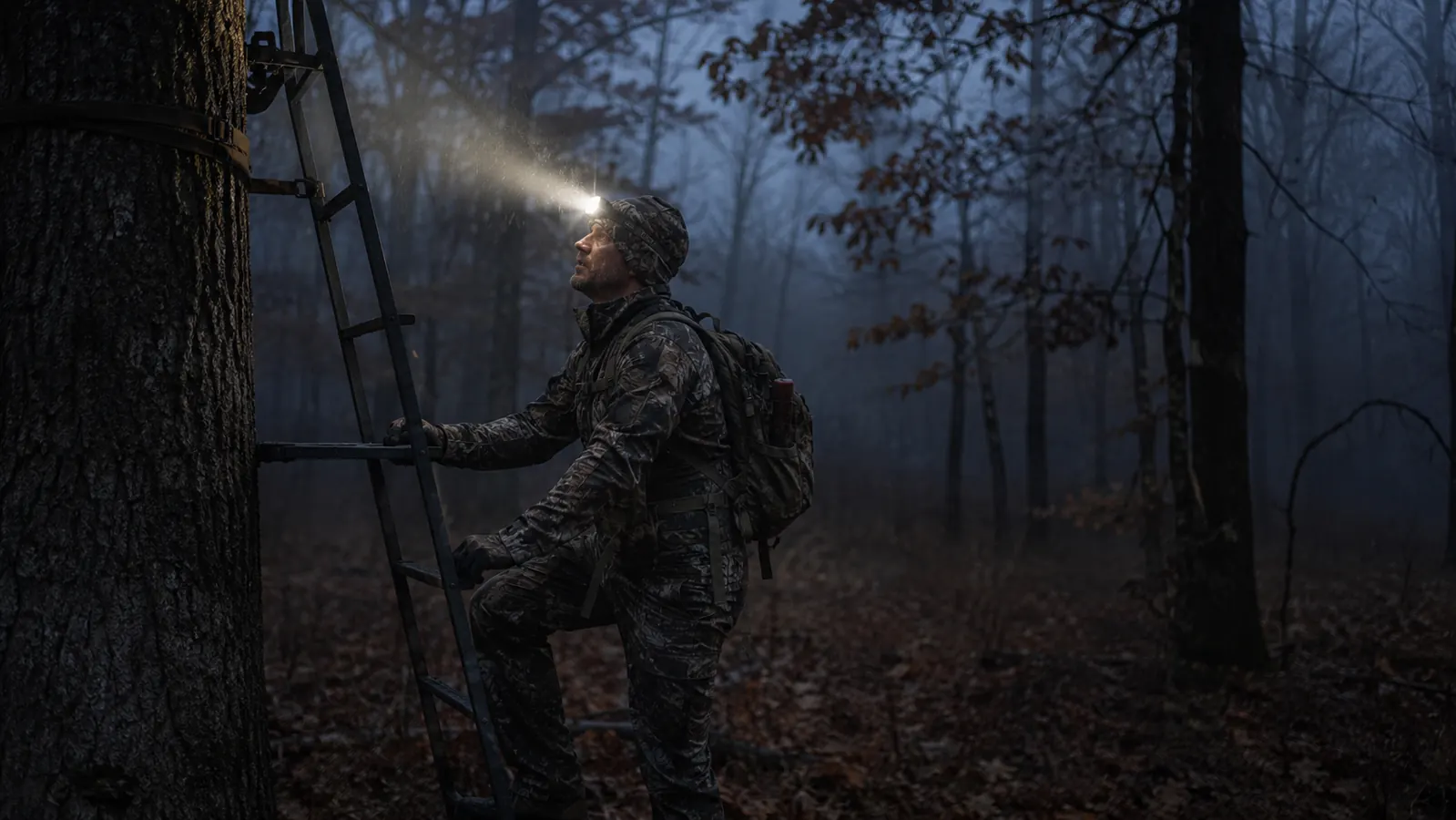
I use the red mode as my default setting from the time I leave the truck until I am fully set up in the stand. Then I switch to white only if I need to read a tag, tie a knot, or find something in my pack. If you are buying this for hunting or wildlife photography, the red mode alone is worth part of the purchase price. Most people spend $15 and never discover it is in there.
Build Quality: What Holds Up and What I Watch
The Blukar is plastic, and it feels like plastic. The headband elastic is tighter than most, which is good for running and scrambling but snug for people with larger heads. The adjustment slider has held up fine for me over a year but feels like it could fatigue with hard use. The USB-C charging port cover is a rubber flap that fits tightly enough to keep a light rain out, but I would not submerge this headlamp or leave it in a steady pour. The IPX4 rating means it handles splashes, not submersion. Fishing in heavy rain, put it inside your hood.
The beam pivot on the front tilts down about 90 degrees, which covers everything from straight-ahead trail use to looking directly at the ground in front of your feet. The pivot is a little stiff at first and loosens with use to a point where it holds its angle reliably. I have not had it drift on me mid-use, which was a persistent problem with a cheaper lamp I had before this one.
At $15.99, you are not getting machined aluminum and O-ring seals. You are getting a light that works, travels small, charges fast, and has not let me down in a year of real field use. The build quality is proportional to the price, which is to say it is better than you expect and not as good as gear that costs four times more. That is about right.
What I Liked
- Genuinely bright at high mode, strong trail beam at distance
- USB-C recharge is fast, about 2 hours from dead
- Motion sensor works well with gloves on or wet hands
- Red light mode is practical for hunters and wildlife observers
- Tiltable beam covers ground work through trail navigation
- Compact, lightweight, easy to pack as a backup
Where It Falls Short
- Max 2000-lumen output lasts only 30 to 45 minutes before step-down
- No AAA battery fallback for emergencies unlike competing lamps
- Motion sensor fires unpredictably when stored loose; must lock it
- 1200 mAh battery is small by mid-range standards
- IPX4 rating means splash-resistant only, not rain-proof
- Headband is tight for larger head sizes
Who This Is For
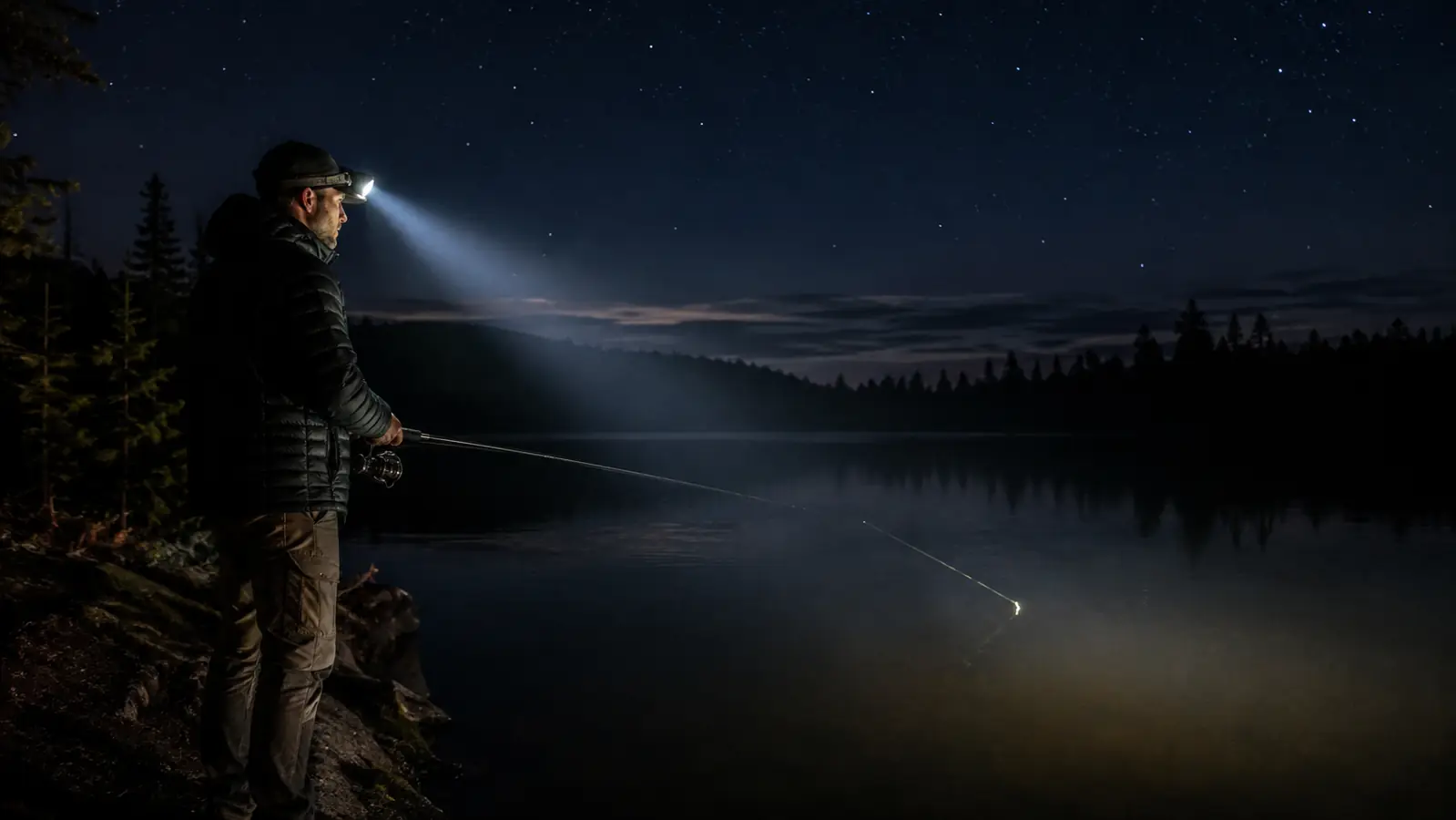
The Blukar is the right buy if you want a capable, rechargeable headlamp for car camping, weekend hiking, bank fishing, and general outdoor use at a price that does not require a second thought. It is also a solid pick as a backup lamp, the one you throw in your daypack or keep in the truck so you always have a light. If you run it at medium brightness and charge it between trips, it will do everything you ask.
For a full breakdown of how the Blukar handles different lighting situations from campsite setup to nighttime trail navigation, the campsite and night hike lighting guide walks through every scenario with specific mode recommendations. That is worth reading before your first outing with this lamp.
Who Should Skip It
If you are doing multi-day backcountry trips without access to a power bank, a headlamp with a larger internal battery or AAA backup capability is the smarter call. If you need your light to sustain max output for more than 45 minutes at a stretch -- caving, technical night climbing, extended pack-out after a hunt -- this headlamp will step down on you at the worst time. And if you have a larger head and prefer a relaxed-fit headband, try it on before committing because the band runs snug.
For anyone comparing this against the Petzl and willing to spend five times the price for a larger battery and AAA fallback, I break down exactly what you gain and lose in the Blukar vs Petzl Actik Core comparison. The Petzl wins on field reliability insurance. The Blukar wins on every other cost-benefit calculation for most campers.
If you know the runtime ceiling and plan around it, this headlamp earns its spot in your kit.
The Blukar checks in at $15.99 with over 20,000 reviews and a 4.5-star average. USB-C rechargeable, five brightness modes, red light for hunting, and a motion sensor that is actually useful. Check current price on Amazon.
Amazon Check Today's Price on Amazon →